
Which hedge to choose for the Estonian climate?
Thuja, spruce or a deciduous shrub? We compare the most popular hedge plants by growth speed, maintenance and winter hardiness.
A hedge shapes your property boundaries for 20 to 30 years, and choosing the wrong species rarely shows in the first summer: a sun-loving shrub planted in house shade goes bare at the base, a salt-sensitive conifer planted along a salted street turns brown every March, and an unclipped shrub border on a narrow plot swallows two metres of lawn. Here is how the most reliable hedge plants perform in Northern Estonia and when to choose a thuja hedge, yew, spruce or deciduous shrub.
Evergreen thuja hedges: Smaragd vs Brabant
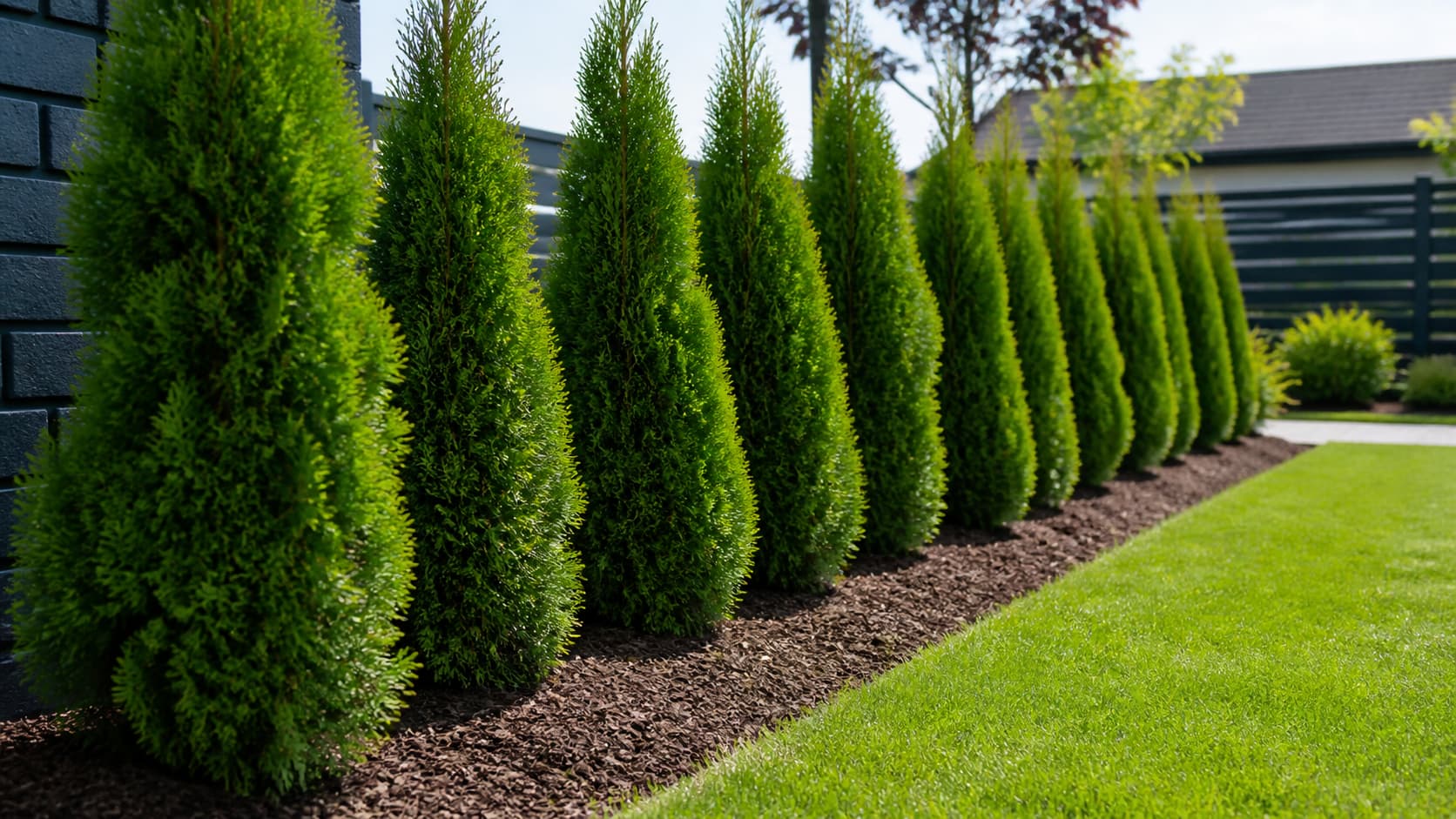
Western red cedar / thuja (*Thuja occidentalis*) is the number-one hedge plant across Tallinn and Harjumaa because it gives year-round screening while taking up only 60 to 90 cm of width:
- 'Smaragd': grows in a neat, narrow cone with glossy emerald foliage that keeps its colour through winter, adding 15–25 cm a year. Ideal if you want a formal look with minimal shearing (trimming leaders and sides once a year is enough). Planted at 2.5 to 3 plants per linear metre.
- 'Brabant': vigorous (30–40 cm a year) and extremely cold-hardy, knitting into a solid privacy wall within two to three seasons. In return, it must be sheared once or twice a year to stay dense and prevent heavy cone set from making the crown look ragged. Planted at 2 to 2.5 plants per metre.
For help choosing grades, spacing and soil preparation, see our thuja planting and hedge installation service.
Yew, spruce and mountain pine: hardy conifer alternatives
Where a plot is heavily shaded or exposed to coastal gales, other conifers outperform thuja:
- Hybrid and English yew (*Taxus media* 'Hicksii', 'Hillii'): the only conifer that thrives in deep shade under mature trees as well as in sun, and the only one that buds back reliably from old wood if cut back hard.
- Norway and Serbian spruce (*Picea abies*, *Picea omorika*): classic windbreak hedges for larger plots. Spruce is completely winter-hardy and dense, provided new shoots are sheared every June; once left unclipped for several years, spruce cannot be cut back into bare interior wood.
Deciduous hedges: cotoneaster, privet, chokeberry and spirea
Deciduous hedges lose their leaves in winter, but they offer spring blossom, vivid autumn colour and far better resistance to road salt and heavy snowplough banks:
- Shiny cotoneaster (*Cotoneaster lucidus*): one of the toughest formal hedge shrubs in Estonia, with dark glossy leaves turning fiery red in autumn and high tolerance for shade and urban dust.
- Black chokeberry (*Aronia*) and privet: fast-growing, wind-tolerant and easy to rejuvenate by cutting right back to the base if needed.
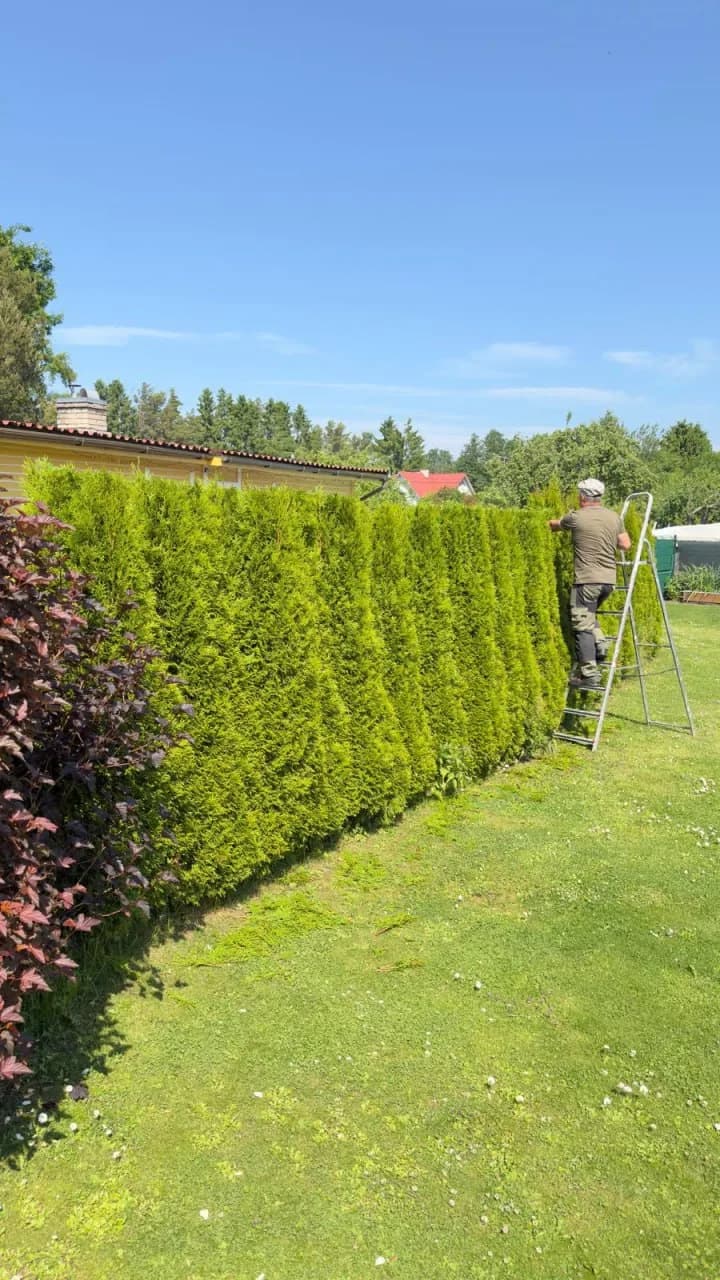
We supply nursery stock directly through plant ordering and delivery, bring planting substrate via screened topsoil delivery and keep hedges crisp under hedge trimming and conifer care.
Common questions
How far inside the boundary fence should a hedge be planted?
Set the centreline of thuja or shrub trunks at least 70 to 90 cm inside the fence or boundary line. That leaves a 30 to 40 cm maintenance and airflow gap between the mature foliage and the fence so lower branches receive light and you can shear both sides comfortably.
Which hedge plants tolerate winter road salt along a street best?
Thuja foliage burns and browns when hit by salty slush or spray from gritted roads. Along salted streets, deciduous shrubs such as shiny cotoneaster, rugosa rose, hawthorn, Amur maple or spirea hold up far better.
What plant height is the best value when buying a new hedge?
Plants graded at 120–140 cm or 140–160 cm offer the best balance of price and establishment speed: they give chest-high screening on day one while rooting faster and suffering less wind rock than trees over two metres tall.
Hedge trimming and conifer care
We visit your site, assess the scope and send a written offer. Free of charge and with no obligations.