
Planting thujas, trees, shrubs and flowers in Tallinn and Harjumaa
Thujas for hedges, fruit trees, ornamental shrubs and perennials, planted and fertilised properly.
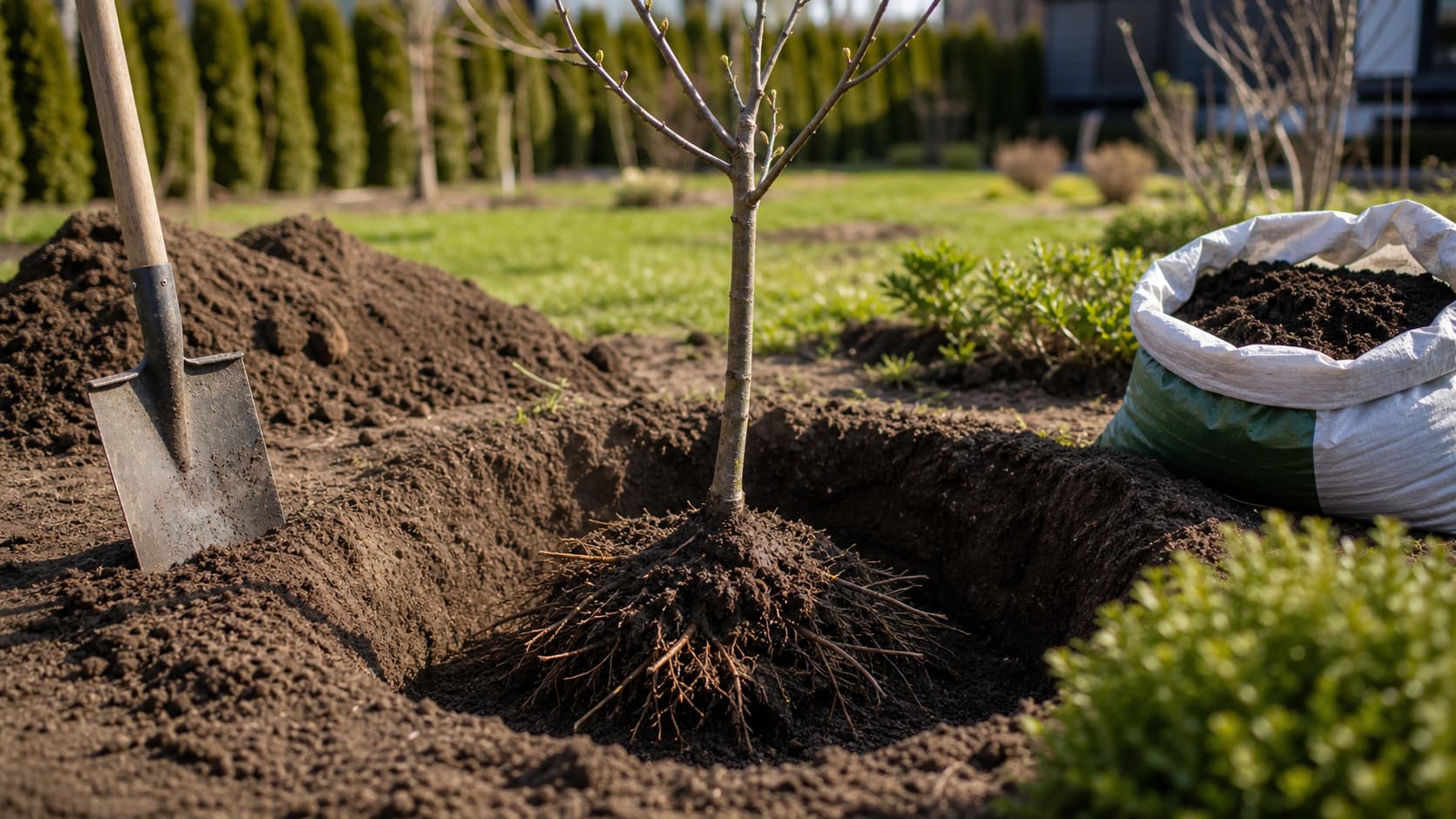
Whether a tree thrives or struggles is decided on planting day. Planting too deep, leaving pot-bound roots unteased, or planting into dry Nõmme sand without rich topsoil stunts growth for years. We plant thujas, fruit trees, specimen trees, berry bushes, ornamental shrubs and perennials across Tallinn and Harjumaa so roots establish cleanly in the first season.
Local soils in Tallinn and Harjumaa dictate pit preparation
Soil profiles across Tallinn and Harju County vary sharply, so we build each planting pit to match the site:
- Sandy pine soils in Nõmme, Männiku and Kloogaranna: rainwater drains through sand within minutes, leaching nutrients away. We dig wider pits and blend clay-rich topsoil, compost and Kekkilä planting substrate into the backfill to hold moisture around the root ball.
- Clay moraine and limestone in Viimsi, Kakumäe, Rae and Harku: dense clay holds meltwater like a bowl. On clay plots we lay a gravel drainage base and plant slightly proud on a raised berm so roots never suffocate in standing water.
- Coastal plots in Pirita and Merivälja: sea winds dry out conifer foliage in early spring while the ground is frozen. Firm three-stake guying and a deep autumn soak before frost are essential here.
Container plants vs root-balled (B&B) nursery stock
Container plants (C3 to C50 pots) can be planted from April to October. Tightly circling roots must be scored vertically in three or four places or teased apart by hand before planting so they anchor into surrounding soil.
Root-balled (B&B) conifers and trees wrapped in burlap and wire baskets are planted in April–May or from mid-August to October. Never strip the burlap or wire basket before setting the tree into the pit, as that shatters the soil ball. Once the tree is plumb, we unfasten the top wire ring and fold back the burlap around the root collar to decompose underground.
Step-by-step planting procedure
1. Layout and utility check: we verify sun exposure, mature crown spread and underground cables or pipes. 2. Excavation and substrate mixing: pits are dug 1.5 to 2 times wider than the root ball. Native soil is blended with species-specific substrate (acidic peat pH 4.5–5.5 for ericaceous plants; neutral composted topsoil for fruit and deciduous trees) and slow-release fertiliser. Bulk soil arrives via our screened topsoil and bulk material delivery service. 3. Root collar levelling and watering rim: the root flare sits flush with finished grade or 2–3 cm higher for settling, surrounded by an earth watering ring to hold 20–30 litres of water. 4. Staking and mulching: trees are secured to pressure-treated stakes with wide flexible belts, and topped with 5–7 cm of pine bark mulch leaving a 10 cm gap around the stem.
For privacy screens, see thuja planting and hedge installation. We source stock through plant ordering and delivery and build borders under flower bed creation.
Plant installation pricing
Pricing is negotiable and depends on plant count, root-ball weight, soil conditions, imported substrate and staking. Send your plant list and location via the enquiry form for a written quote.
Common questions
When is the best time of year to plant trees and shrubs in Estonia?
Container plants go in from April to October, bare-root stock in early spring or October, and root-balled (B&B) trees in April–May or mid-August to October.
How deep should a tree or shrub be planted?
Always plant at the exact depth the tree grew at in the nursery. After settling, the root flare must stay level with the ground; burying the stem collar causes bark rot and slow decline.
Should fresh manure or high-nitrogen fertiliser go into the planting hole?
No. Fresh manure or fast-acting nitrogen burns young root hairs. We mix mature compost into the upper backfill and apply low-nitrogen planting fertiliser rich in phosphorus and potassium.
How much water do newly planted trees need during their first summer?
In dry weather, newly planted trees and shrubs need a deep soaking once or twice a week — 15 to 30 litres per plant rather than light daily sprinkling.
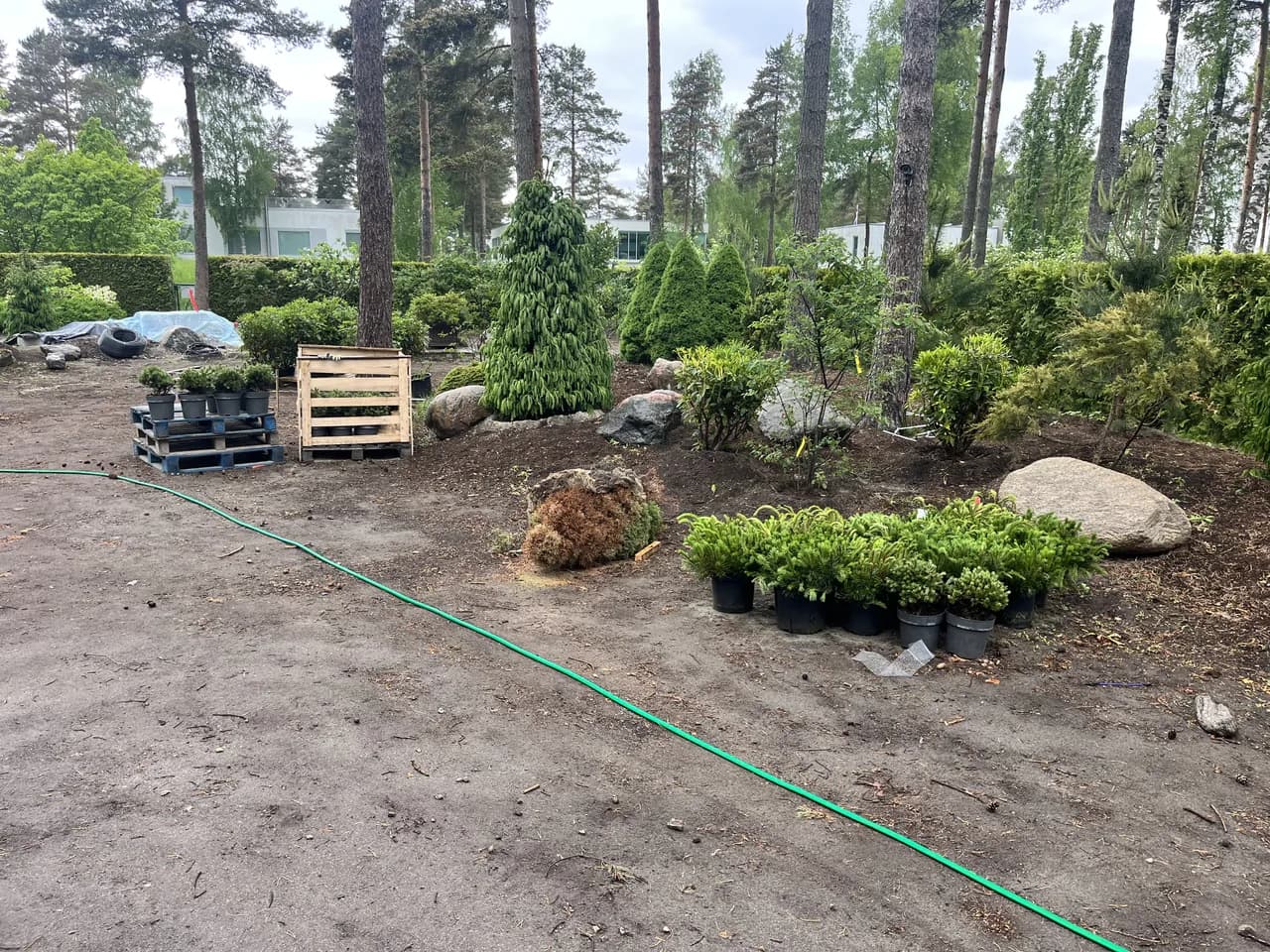
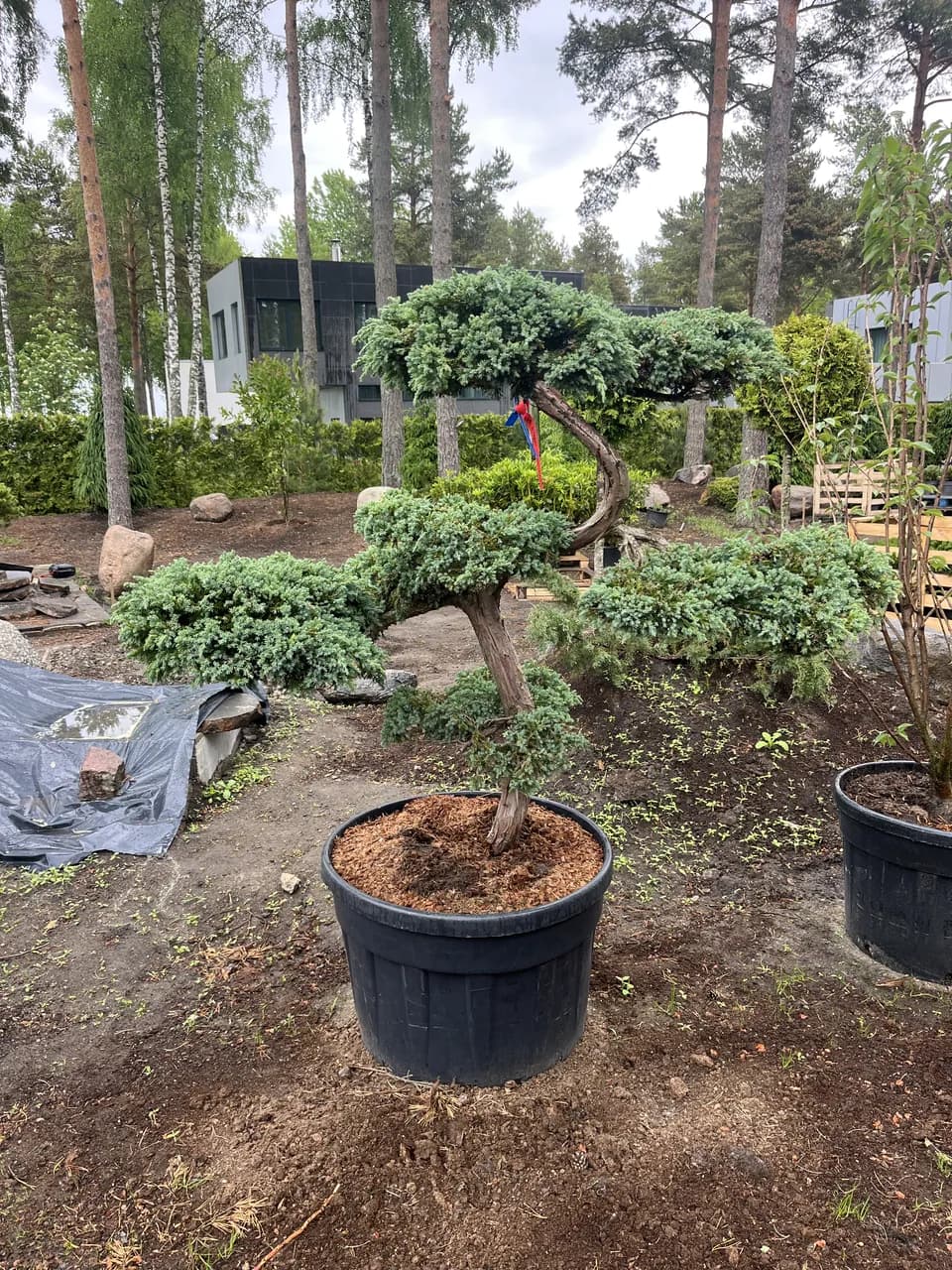
See our work
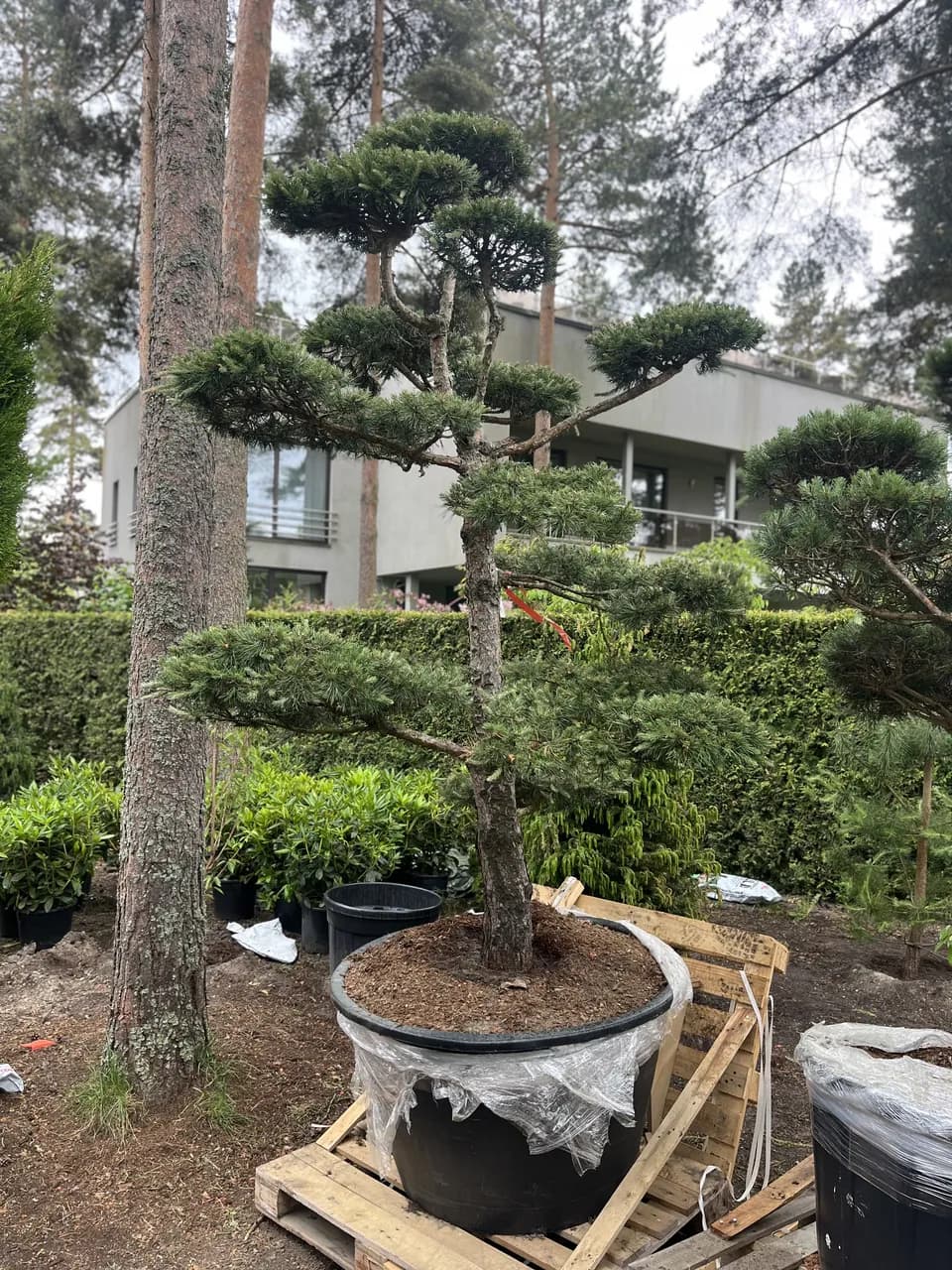
Photos from our own jobs, taken during the work and after it.
Also worth reading
BlogHow to plant a fruit tree properly
An apple tree lives 50 years, and half its fate is decided on planting day. Step-by-step: hole, soil, depth, watering.
Read more