
Automatic irrigation system installation in Tallinn and Harjumaa
Your lawn and beds get the right amount of water even when you are away.
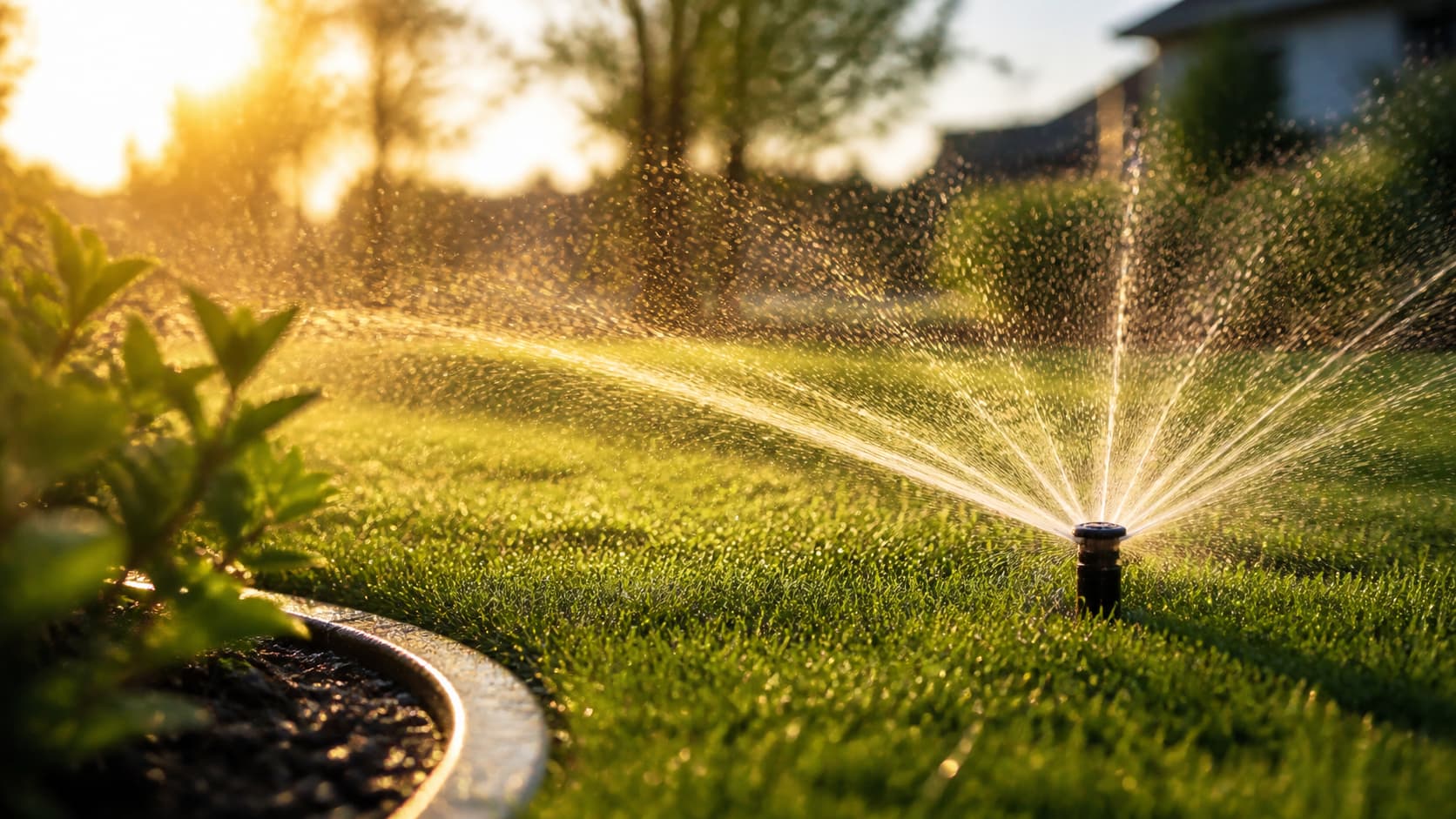
Standing with a garden hose for an hour every evening in June and July rarely waters a lawn evenly: the top centimetre of turf gets wet while soil 10 cm down around grass and thuja roots stays bone-dry. An automatic irrigation system divides your garden into balanced hydraulic zones and waters between 04:00 and 06:00 in the morning, when mains pressure is steady, wind is calm and evaporation loss is minimal. We design, install and service automatic irrigation systems across Tallinn and Harjumaa.
Hydraulic design: pressure, flow rate and zone layout
A reliable irrigation system starts with testing the water supply rather than digging trenches. During our site visit we measure static pressure (bar) and dynamic working flow rate (litres per minute or cubic metres per hour at operating pressure).
Based on your available flow, we split the garden into independent solenoid-valve zones:
- Pop-up lawn sprinklers (Hunter MP Rotator and Rain Bird): sprinkler bodies sit flush with the turf and pop up under water pressure only while running. We lay out heads strictly on a head-to-head spacing grid so every sprinkler's spray reaches the neighbouring head — eliminating dry brown rings during summer heatwaves.
- Pressure-compensating drip lines for hedges and beds: thuja hedges, shrub borders, perennial beds and greenhouses need deep root watering without wetting foliage. Because drip lines run longer at lower flow rates than lawn nozzles, they are always piped on dedicated drip zones.
- Smart Wi-Fi controller and rain sensor: a weather-aware controller (Hunter Hydrawise or Rain Bird ESP-TM2) adjusts run times automatically based on local forecast and rain sensor input, skipping cycles whenever rainfall is sufficient.
Installing in new builds vs established lawns
The most cost-effective moment to lay main PE supply lines (25 mm and 32 mm) is during groundworks before turfing — alongside ground levelling and earthworks and right before rolled turf installation or lawn seeding.
We also install irrigation cleanly into established gardens: we slice a narrow ribbon of sod, lay piping 25–30 cm deep, compact the trench and fold the original turf strip back in place. Within two to three weeks the seam disappears. When combined with thuja hedge installation or flower bed creation, we route drip lines directly under the bark mulch.
Autumn compressed-air blowout and spring start-up
Estonian winters freeze ground down to 50–80 cm. To prevent trapped water from cracking pipes, valves and risers, we winterise systems every October by blowing out every zone with an air compressor. In April or May we return to turn on the water, clean filters and check nozzle arcs.
Irrigation system installation pricing
Pricing is negotiable and depends on irrigated area, garden geometry, water flow rate and whether the lawn is newly graded or established. On-site flow measurement, zone layout and quotation are free.
Common questions
Do pop-up sprinklers get in the way of robotic mowers or regular lawnmowers?
No. Pop-up sprinkler bodies sit flush with the soil surface and retract underground when off, allowing walk-behind and robotic mowers to roll straight over them.
Will my system run off standard mains water pressure, or do I need a tank and pump?
Most streets in Tallinn and Harjumaa deliver 2.5–4.0 bar pressure and 1.5–2.5 m³/h flow from the municipal main, which runs a multi-zone system directly without a tank or pump.
How deep are the irrigation pipes buried?
Frost-resistant polyethylene (PE) pipes are trenched 25 to 35 cm deep — safely below lawn aerator tines and garden spades — and blown dry with compressed air every autumn.
How many days does it take to install irrigation in a typical garden?
For a standard 800 to 1,500 m² plot (4–6 lawn zones plus 1–2 drip zones), installation and tuning take 2 to 4 working days.
See our work
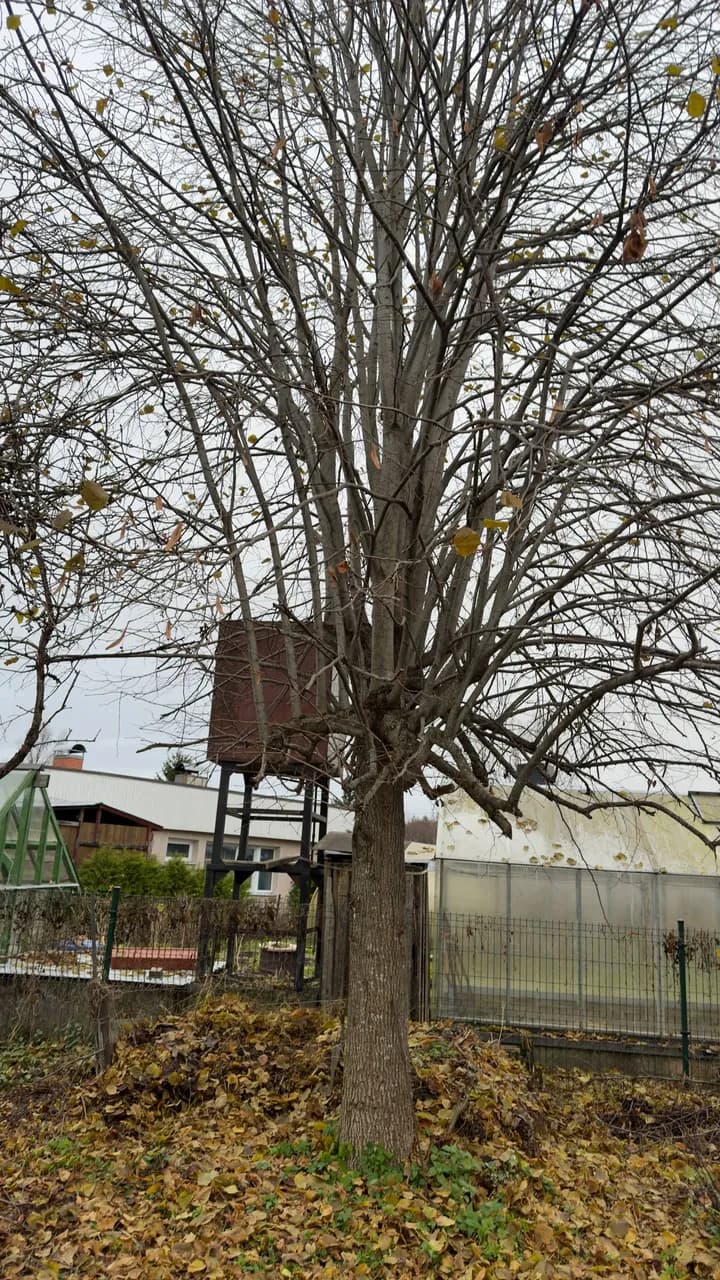
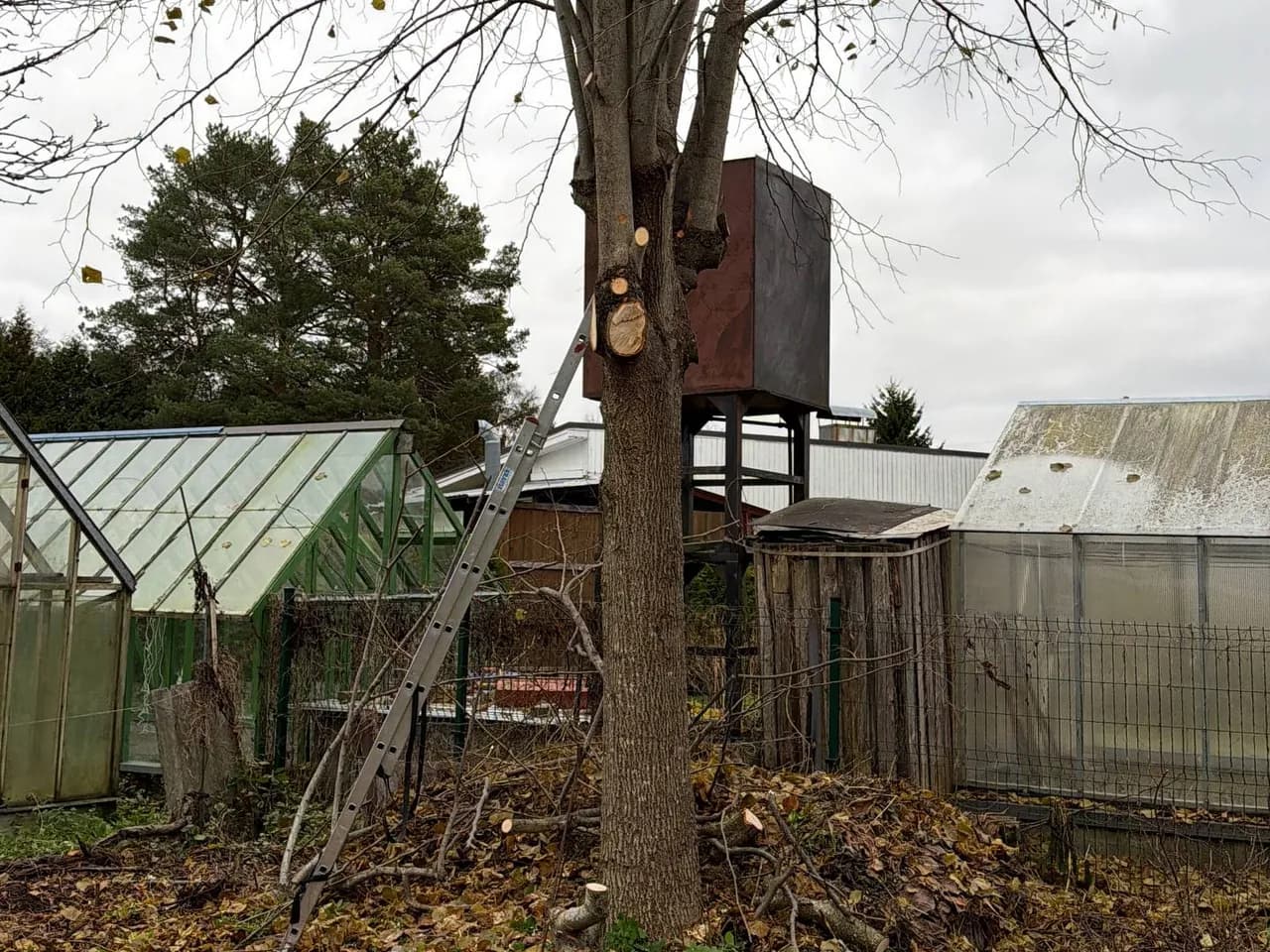
Photos from our own jobs, taken during the work and after it.
Also worth reading
BlogAutomatic irrigation: when does it pay off?
Automation feels like a luxury until you add up the cost of water, time and dried-out plants. An honest look at the numbers.
Read more