Screened topsoil, sand and crushed stone delivery
Small and medium loads, unloaded where you actually need them.
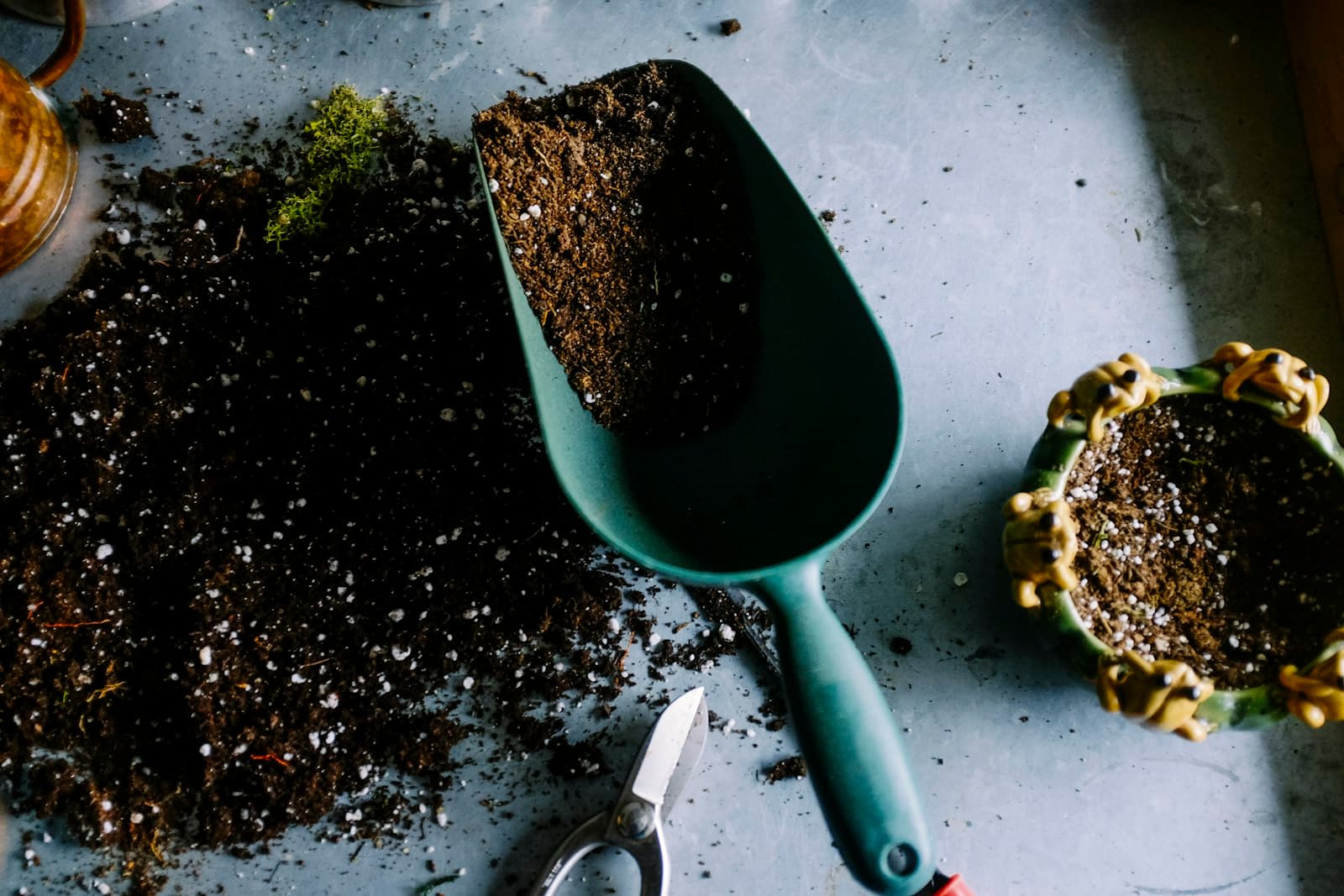
Most orders go wrong before anything is even delivered: the material is ordered by the tonne when the job is measured in cubic metres, or exactly the calculated amount is ordered and the bed sits two fingers low once it has settled. We deliver screened topsoil, sand, crushed stone and mulch in Tallinn and Harju County, and we work the quantity out with you before the order goes in.
How much material a job takes
The sum itself is simple: area in square metres multiplied by layer depth in metres, and the answer comes out in cubic metres. An example from one manufacturer's own materials: a plot 10 × 15 metres with a 150 mm layer is 10 × 15 × 0.15 = 22.5 m³.
Two things usually drop out of that sum.
Settlement. A spread layer of topsoil sinks by roughly 20 % over time. That is what Kekkilä writes in its no-dig bed guide, along with the advice to firm the layer from above with a rake so it beds down sooner. So if you want 20 cm of soil in the end, ordering exactly 20 cm worth is pointless.
Losses at the edges and in levelling. No plot is perfectly flat. If the surface runs in waves before the material arrives, the low spots swallow more than the plan allows for. That is why ground levelling is done before the delivery, not after it.
Layer depths are written down in Estonia
The growing layer under a lawn is not a matter of taste. Tallinn's supplementary requirements for road maintenance works (Tallinna teehoiutööde täiendavad nõuded) state, for a lawn that gets walked on, a growing layer of 100–150 mm, a minimum layer depth of 100 mm, and mineral growing soil only.
The guide to landscaping works on national roads (Riigiteede haljastustööde juhis) from Transpordiamet, the Estonian Transport Administration, sorts lawns into classes and gives each class its own growing-layer depth: class I 15 cm, class II 10 cm, class III 5–7 cm. The same document says the growing layer has to be built to those dimensions and properly compacted.
For planted areas the figures are larger: mass planting — shrubs, perennials, ornamental grasses — takes a 400 mm growing layer, while a single shrub or climber takes 600 mm at a width of 700 mm.
And one sentence that saves an argument: the depth of the mulch layer is not deducted from the depth of the growing layer. Mulch goes on top of the soil, not instead of it.
The quantity comes out of those figures. A hundred square metres of new lawn at 12 cm is 12 m³ of soil, not "a lorryload". If turf is on the plan as well, the growing layer is finished first, because no soil goes in under turf once it is laid.
Screened topsoil, unscreened topsoil and compost
Screened topsoil is soil put through a screen that keeps back the stones, roots and rubbish. Estonian suppliers usually sell it at 0–20 mm, some at 0–25 mm. This is the material that goes under a lawn, into beds and into the final levelling of a surface.
Unscreened topsoil is the same soil without the screening, at a fraction up to 100 mm. The stones and lumps stay in it. It is fill material for holes, hollows and low spots, not a base for a lawn.
Compost soil is rotted-down, screened organic matter. It is considerably lighter than mineral soil, and it is not used on its own for a whole layer but mixed in: compost brings the nutrients and the structure, mineral soil brings the load-bearing base. That is exactly why the Tallinn rules ask for mineral growing soil under a lawn.
Bagged soil and loose soil are not the same thing. A peat-based bagged garden soil has a bulk density of 400 g/l on the manufacturer's own figures, which is 400 kg/m³: three to four times lighter than loose screened topsoil. If you are used to counting in bags, your sense of the quantity will mislead you over a large area.
Crushed stone fractions
The numbers in the name of a fraction are the grain size in millimetres, the lower and the upper limit. The quarries' own descriptions say what belongs where.
- 0/16 and 0/32 are optimally graded mixes. 0/32 suits lightly trafficked roads both as a base layer and as a wearing course, with a recommended depth of 10–15 cm in a single layer.
- 4/16 and 8/16 are fine crushed stone: filler in concrete and asphalt mixes, and the wedging layer over coarser stone.
- 16/32 is medium crushed stone, the load-bearing and draining layer under buildings and structures. The same fraction is sold for gardens as decorative cover and drainage material.
- 32/63 is coarse crushed stone: road base construction and any place where settlement is a risk and high bearing capacity is required.
- Washed crushed stone holds less fine material, meaning dust, than the standard product, because of the washing process.
If the material is going under paving, read the stone manufacturer's own instructions. Wienerberger, for example, writes that the base has to be durable, frost-resistant and permeable: about 25 cm of crushed stone (8–16 mm) or gravel (0–35 mm), and where there are several layers, at least one layer of about 15 cm free of fines, with a 3–5 cm bedding layer on top of it. That whole calculation is part of paving installation.
Weight and volume
Bulk material is sold in Estonia both by the cubic metre and by the tonne, and the two are not the same number. Rough orders of magnitude on the suppliers' own figures: screened topsoil 1.3–1.5 t/m³, unscreened topsoil about 1.5 t/m³, sand 1.4–1.6 t/m³, compost 0.7–0.95 t/m³.
For crushed stone the suppliers publish different numbers themselves: Väo Paas, a limestone quarry, prints 1 m³ ≈ 1.33 t next to its limestone crushed stone price list, while another supplier works to 1 m³ = 1.5 t. Over a real load that gap shows, so it is worth agreeing which unit you are speaking in when you order.
Pine bark mulch is the lightest of them: a 1.5 m³ big bag weighs about 450 kg on the supplier's figures.
A practical rule: soil and mulch are better counted by volume, because moisture changes the weight. Crushed stone is more often bought by the tonne, since the quarry weighs it anyway.
Mulch
The only thing that works against weeds in mulch is sufficient depth. For pine bark the Transpordiamet guide states 5–7 cm, an Estonian supplier recommends 7–10 cm, and the Royal Horticultural Society (RHS) gives organic mulch at least 5 cm, ideally 7.5 cm. So the sensible range in a garden is 5–10 cm, not a thin layer for the look of it.
Two limits come with that. Mulch is not packed against the root collar and trunk of a tree: a clear ring is left, about 10 cm from the trunk in horticultural guidance. And a thicker layer is not a better one — an overgrown mulch layer holds excess moisture and lowers the oxygen in the soil. Spreading the mulch is covered under mulching.
Delivery and unloading
Most of the time is lost where the material is tipped in the wrong place and then moved by hand to the right one. So we agree three things beforehand: where the lorry can get onto the plot, where the heap goes, and whether a sheet or a cover has to go underneath so the paving or the lawn does not suffer.
If there is no room and no access on site, we say so in advance and offer an alternative: a smaller quantity in several loads, or unloading at the edge of the plot and carrying it on from there. If the material also has to be spread and the surface finished off, that comes under landscaping works.
How much topsoil does a new lawn need?
Tallinn's requirement for a lawn that gets walked on is a growing layer of 100–150 mm, 100 mm at the minimum. For a hundred square metres that is 10–15 m³ of soil, and it is worth adding an allowance for settlement.
What is the difference between screened and unscreened topsoil?
Screened topsoil has had the stones and roots taken out of it, the fraction is usually 0–20 mm, and it goes into the growing layer. Unscreened topsoil runs up to a fraction of 100 mm and suits fill, not the ground under a lawn or a bed.
Will you work out the quantity for us?
Yes, and that part of the job is free. Give us the area and the layer depth you want, or let us measure on site: you get the cubic metres, and we say how much to add on top to cover the settlement.
How large a load will you actually deliver?
Our work is small and medium quantities: a bed, a lawn area, a base under a driveway. If the quantity turns out to be genuinely large, we will say honestly that ordering full loads straight from the quarry comes out cheaper for you, and we will still do the calculation. Ask for a quote and we will agree a delivery time.
See our work
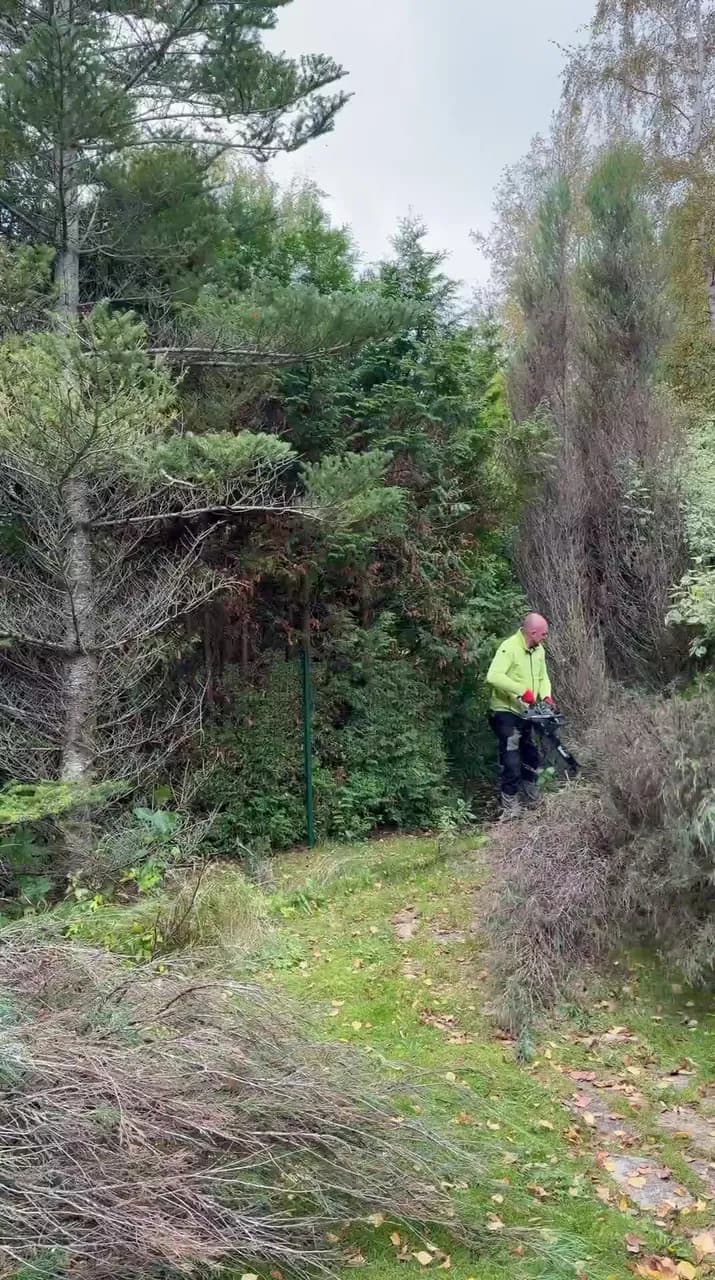
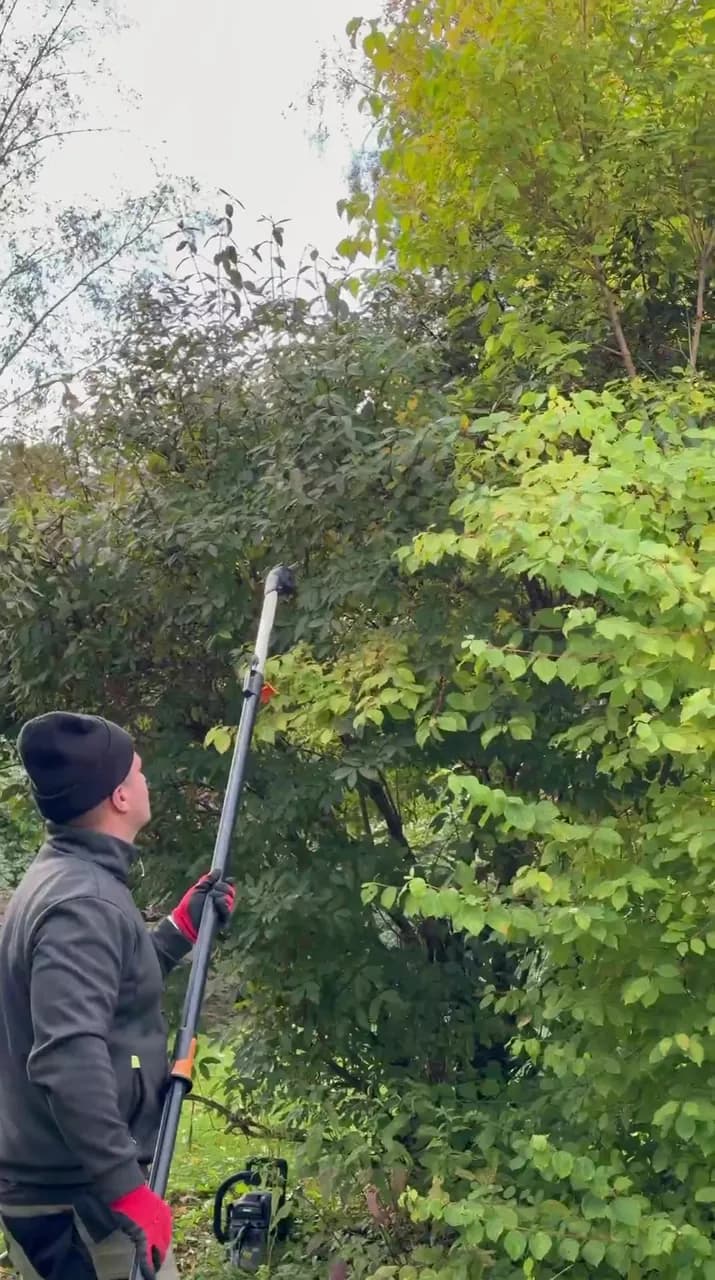
Photos from our own jobs, taken during the work and after it.