

Paving stone and slab installation in Tallinn and Harjumaa
Paths, terraces and driveways that stay level for decades.
Price
- Paving stone layingfrom €75/m²
The final price depends on the area, access and scope of work and is agreed before work starts. All prices
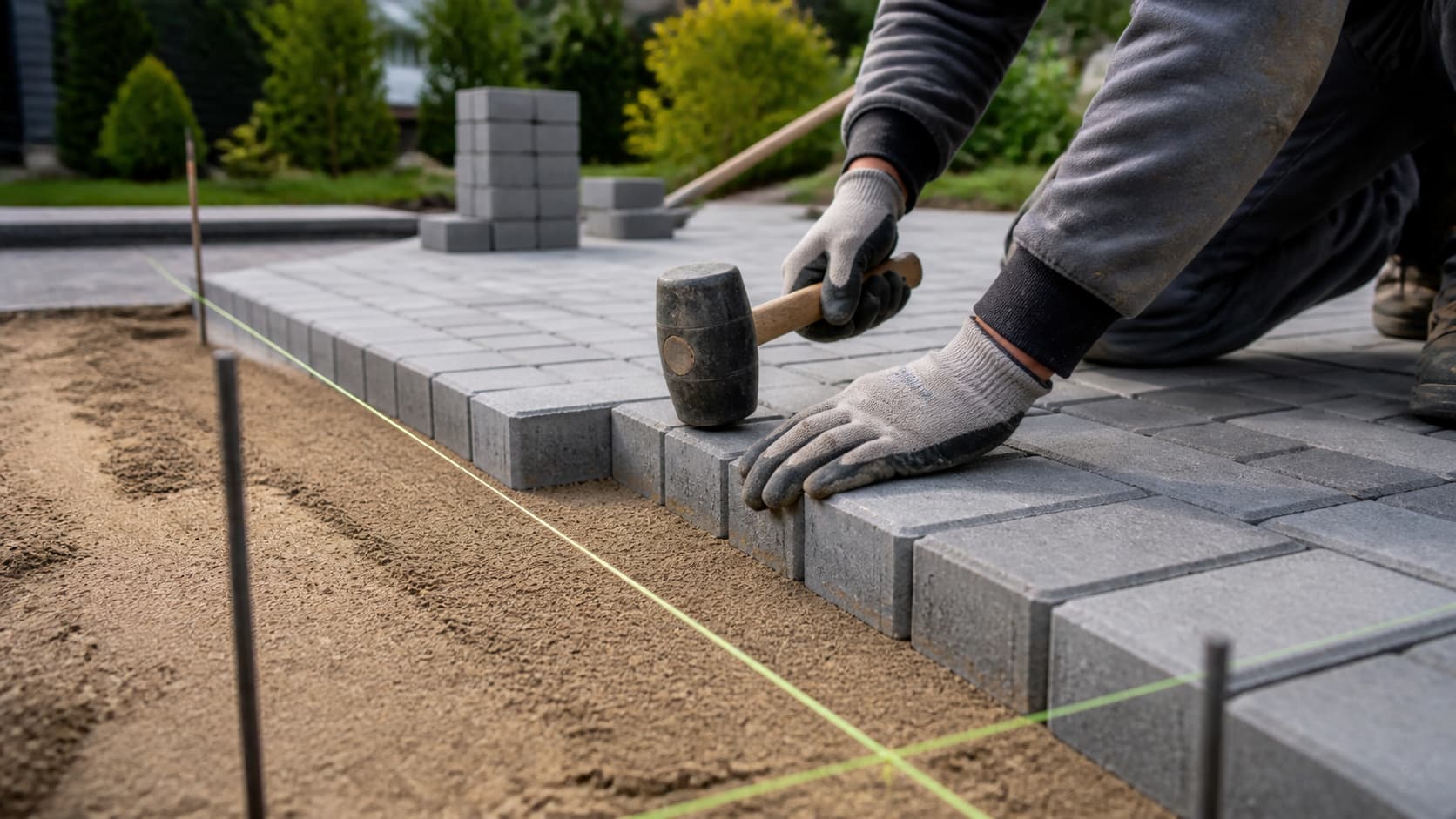
The lifespan of paving is decided before the first stone is laid. Pavers are the visible surface, but what keeps them flat for decades is the base underneath: excavation depth, crushed limestone layers, compaction and drainage slope. A rushed base shows itself after the first or second winter when wheel ruts sink in, puddles stand by the garage and edges spread apart. We install driveways, patios, walkways and parking areas in Tallinn and Harju County.
Excavation of organic soil and crushed limestone sub-base
Base thickness follows the soil type and traffic load. Everything that rots, holds water or heaves with frost must be excavated first: black organic topsoil, peat, roots, clay and construction debris. Over weak ground we lay a non-woven geotextile membrane to keep the soil and aggregate layers separate.
Crushed limestone goes in fraction by fraction and is compacted in layers with a plate compactor:
- 15–25 cm compacted sub-base for pedestrian garden paths, walkways and patio terraces (up to 40 cm on deep frost-heave soils).
- 30–40 cm compacted sub-base (25–40 cm in manufacturer guides) for car driveways and parking areas.
A coarse 32/64 mm sub-layer goes at the bottom on soft ground, followed by a 16/32 mm main bearing course (10–35 cm) and a finer 4/16 mm wedging layer (5–10 cm) on top that locks the coarse stone and prevents bedding sand from washing down. Directly under the pavers sits a 3–5 cm bedding screed of 0–5 mm paving sand or limestone screenings pulled flat over screed rails.
1–2% drainage fall, concrete curb setting and rubber-pad compaction
Where rainwater runs is decided during excavation, not while tapping stones. We build a continuous 1–2% drainage fall (and up to 2.5% in manufacturer guides, never over 5%) sloped away from the house foundation, garage doors and steps toward a lawn edge or drain channel.
Without edge restraint, paving spreads at the borders regardless of base depth. We set concrete curbs (äärekivid) on 10 cm of compacted crushed stone in a 5 cm concrete bed with at least 2 mm joints between stones, leaving the concrete 24 hours to cure before backfilling. Driveway curbs sit above the surface to hold vehicle tyres, while garden path edging can be set flush with the lawn.
Pavers are laid with 3–5 mm joints, swept full with dry joint sand or screenings, compacted with a plate compactor fitted with a rubber pad (taking care not to vibrate fresh factory concrete stone under 28 days of curing), and re-sanded.
What the service includes and pricing
- Excavation of organic soil, old surface removal and soil haulage
- Geotextile and layered crushed limestone sub-base (15–25 cm paths, 30–40 cm driveways)
- Concrete curb setting in a concrete bed and 3–5 cm bedding screed
- Laying concrete pavers, slabs, cobbles or permeable grass pavers
- Joint sanding, rubber-pad plate compaction and site clean-up
Pricing per m² depends on excavation depth, sub-base thickness, stone choice, curbing length and machine access. Ask for an itemised quote showing excavation, aggregate layers, curbs and stone separately so offers are comparable. We measure on site free of charge and agree a written price beforehand (`price negotiable`). Write to us via the contact form. See also ground levelling, bulk material delivery and paving pressure washing.
Common questions
What time of year do you install paving stones?
From spring thaw to late autumn whenever the ground is unfrozen and drained, because frozen or waterlogged subgrades cannot be compacted properly.
Why do paving stones sink or turn wavy after winter?
Either frost-heave organic soil was left under the base, the crushed limestone sub-base was too thin or poorly compacted, or washed-out joint sand left the stones without lateral support.
Can old paving stones be lifted and relaid on a new base?
Yes, intact concrete pavers or cobbles can be lifted, stacked and relaid once we excavate and compact a proper crushed limestone base and fresh 3–5 cm bedding screed underneath.
Do you also build commercial parking areas and permeable grass-paver zones?
Yes, we build small commercial car parks and lay permeable grass pavers where stormwater needs to soak into the ground while still supporting a car.
How should paving be maintained after installation?
Check occasionally that the 3–5 mm joints stay full of sand and top them up after washing so stones cannot tilt and weed seeds find no room to root.
See our work
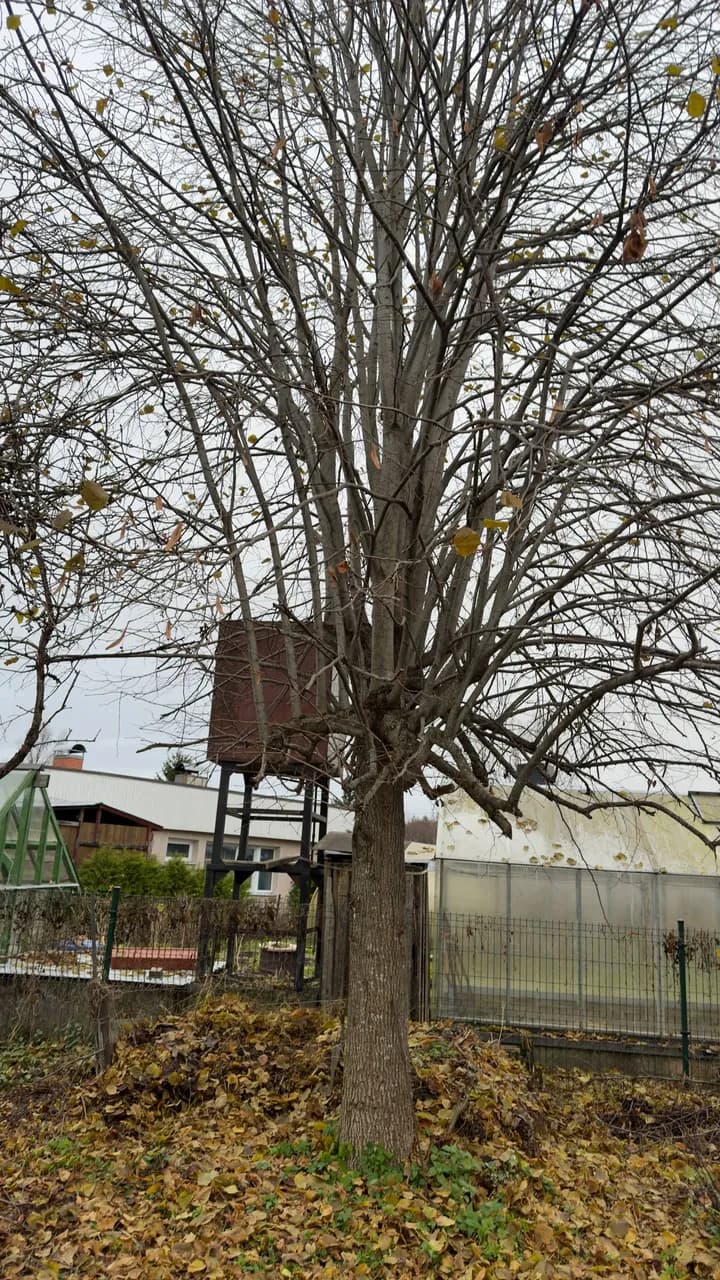
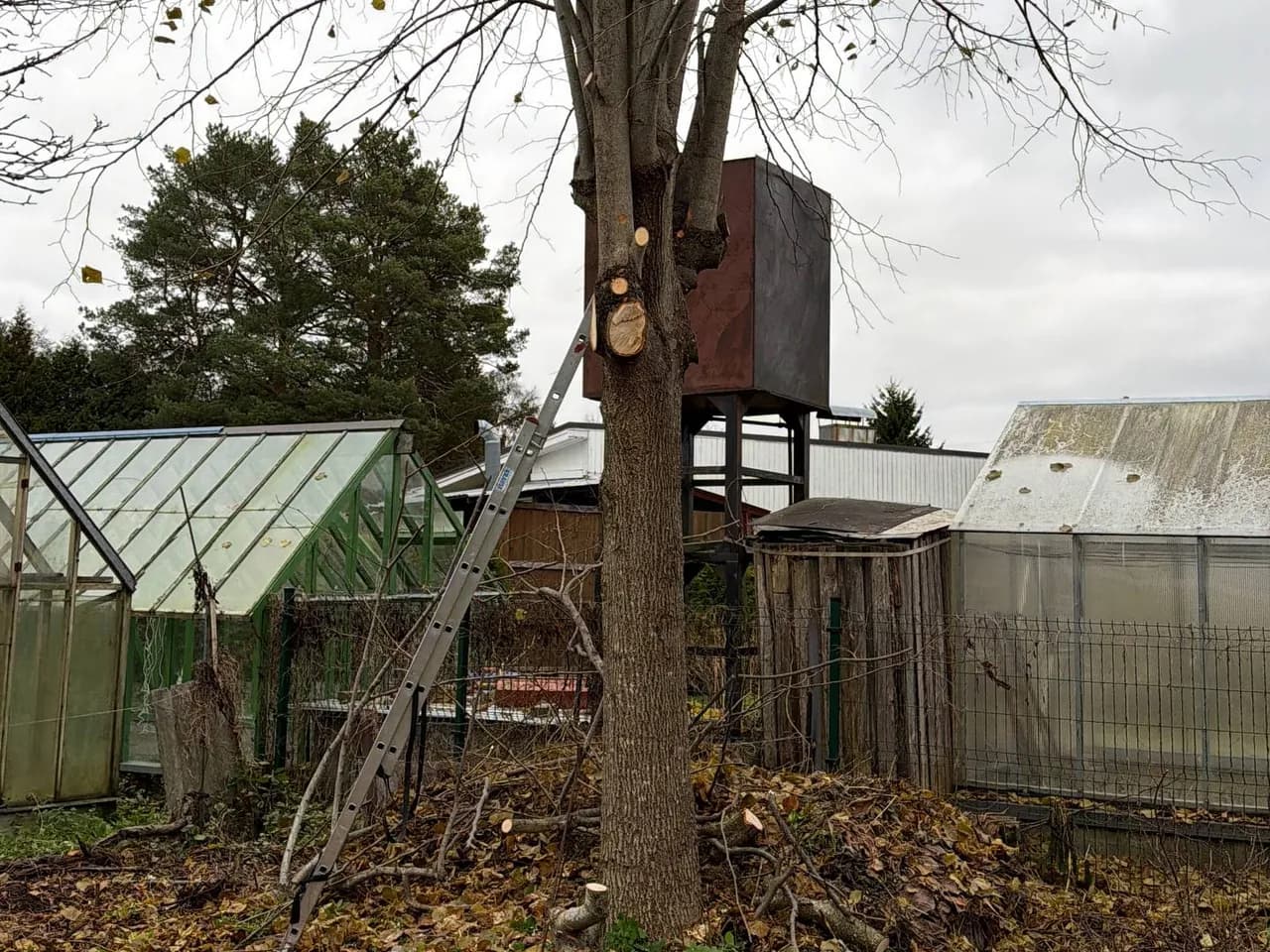
Photos from our own jobs, taken during the work and after it.
Also worth reading
BlogWhich paving to choose: concrete, granite or clinker
Paving is laid for decades, so the wrong material choice is expensive. An honest comparison of the three main options.
Read more