Tree felling and hazardous tree removal
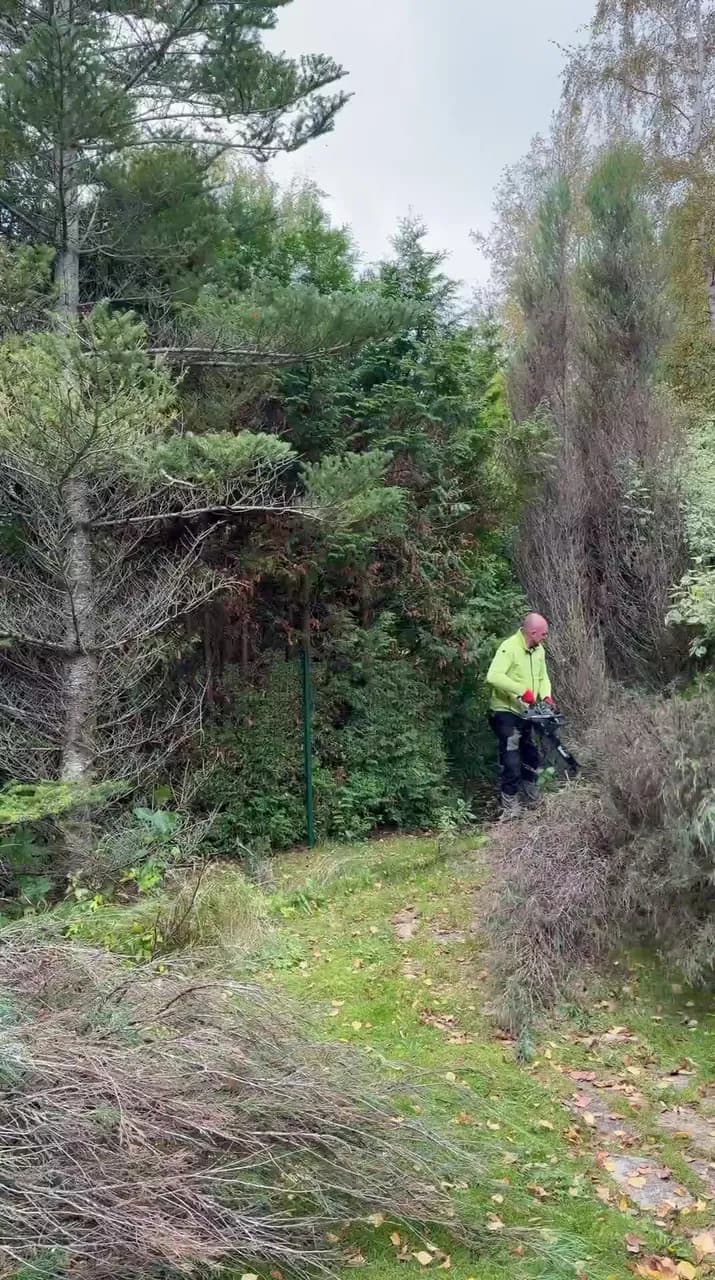
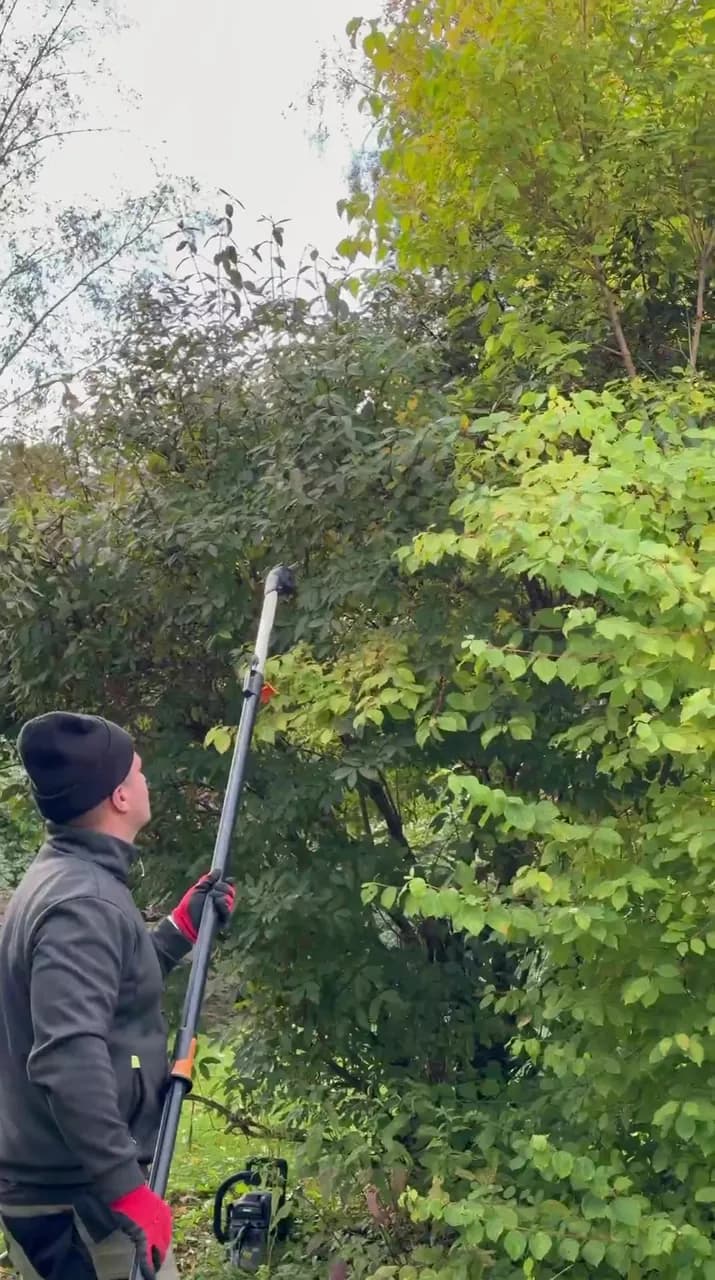
We fell in tight spots, in sections, without damaging the roof or the fence.
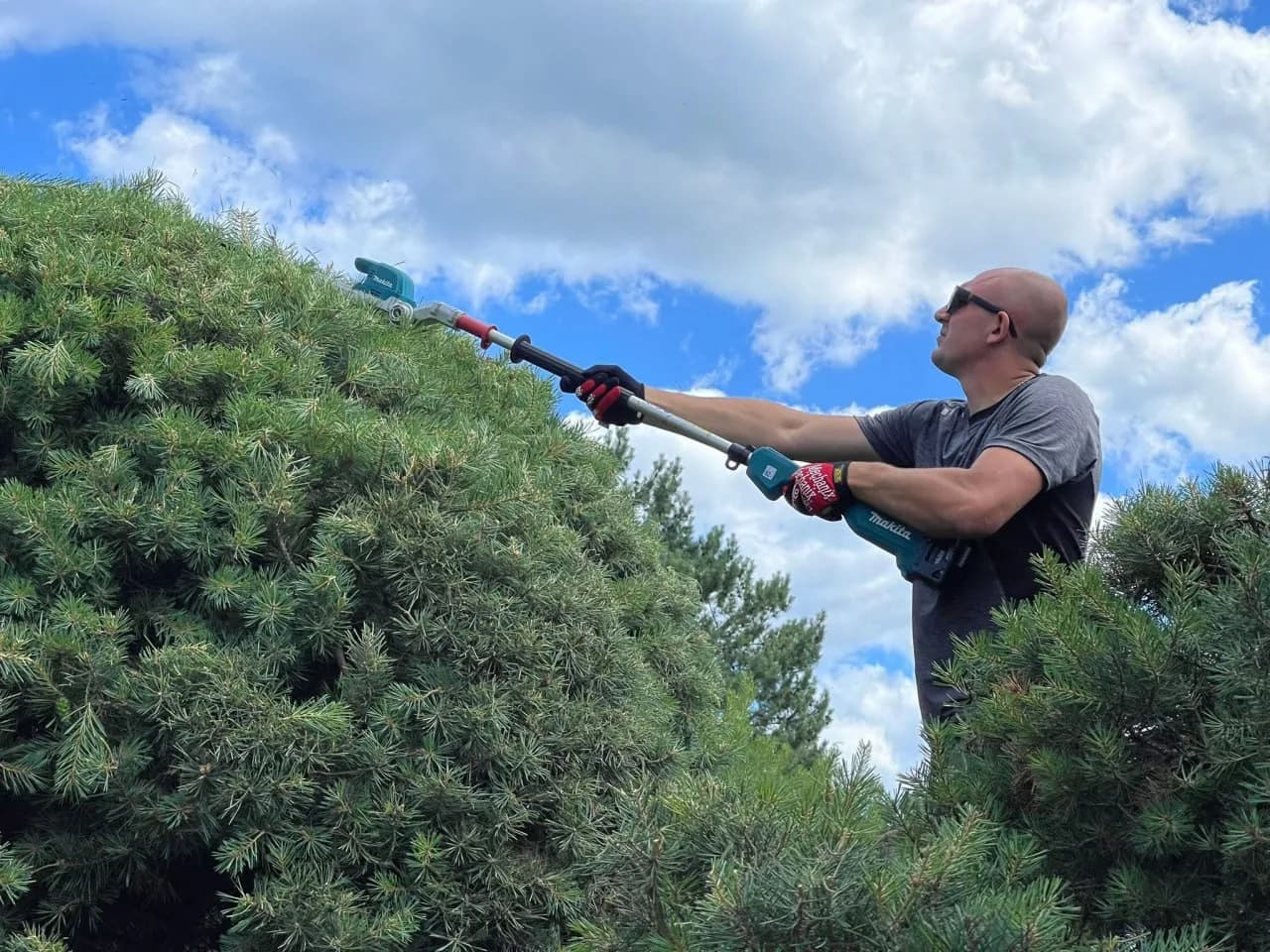
Felling a tree starts with paperwork, not with a saw. In Tallinn and most Harju County municipalities you need a felling permit (raieluba) to take down your own tree, and the property owner answers for a tree felled without one, even when someone else did the cutting. We do both: help with the application, and take the tree down where there is no room to fell it.
In Tallinn the trunk diameter decides
The permit comes from Tallinna Keskkonna- ja Kommunaalamet, the city's environment and utilities department, under the felling and maintenance-pruning permit rules set by Tallinn City Council. No permit is needed for a tree under 8 cm in trunk diameter, measured 1.3 m above the root collar — the rules call that figure rinnasläbimõõt. Exception: a tree planted as replacement planting (asendusistutus) needs a permit anyway.
The rules do not cover shrubs or fruit trees. A fruit tree, as they define it, is one grown for its fruit whose cultivar is in the variety register (sordiregister). You can take out an old apple tree without asking anyone; a maple of the same thickness needs a permit.
Permits are split by the reason for felling: construction (ehitusraie), maintenance (hooldusraie), formative (kujundusraie), damaged tree (kahjustatud puu raie), sanitary (sanitaarraie) and other felling (muu raie), which covers a tree that could damage a building or grows in the protection zone of utility networks. For construction, formative and damaged-tree felling the department can attach replacement planting as a condition: a new tree, shrub or perennial in place of the one removed. The permit itself is good for one year from the day it was granted.
Every Harju County municipality has its own rules
The most common mistake is to assume the Tallinn rule also applies in Viimsi or Rae. It does not: each municipality writes its own ordinance.
Viimsi has a separate section on the nesting period (pesitsusrahu): felling and maintenance pruning are prohibited from 1 April to 31 July, apart from removing a dangerous tree or a dangerous branch. Anyone who wants to cut in that window sends the official a written request at least 14 calendar days before work starts, and for up to three trees the official inspects the site no earlier than three calendar days before the start, to establish whether the work would affect birds' nesting trees or bat breeding sites.
In practice you cannot simply take a tree down in Viimsi over the summer, and the application has to be planned weeks ahead. On the first call we tell you which of the two sets of rules your plot falls under and what that means for the timetable.
The nesting season is law, not good manners
§ 55 of Looduskaitseseadus, the Nature Conservation Act, bans deliberately destroying or damaging the nests and eggs of wild birds, removing nests, and deliberately disturbing birds, especially while they breed and rear their young.
That holds even where the local ordinance sets no nesting period of its own, and it covers shrubs and hedges too. In spring we check the crown before starting. If there is a nest, we wait: that is not caution, that is the law.
When a tree is genuinely dangerous
For a dangerous tree in Tallinn you do not apply for a felling permit, but you do have to notify the department without delay and get its consent. The notice states the number of trees, where they grow, the species, the trunk diameter at 1.3 m and the reason, with photographs that prove the danger. The department answers within one working day, and once consent is given the tree has to come down within ten days — after that the case goes into the ordinary permit procedure. If a tree comes down without consent and the danger is not proven afterwards, the notice is treated as an application for a formative felling permit: proceedings, and possibly a replacement-planting obligation.
That is why we do not stretch the word dangerous. The rules set out fairly precise signs. A damaged tree is one whose value class has fallen through human activity: the top branches or more than half the crown dried out, the crown thinned, bark damage on the trunk reaching the wood (at least 10% of the trunk circumference on a spruce, at least 30% on other species), or at least 30% of the root system destroyed. Sanitary felling covers a tree that is dead or dying, has extensive trunk or root rot, trunk-pest damage, or a weak structure for some other reason.
If you are not sure, ask. We will look at the tree and say honestly whether it is a hazardous tree, a tree that needs care, or a tree that simply blocks the view.
In a tight spot the tree comes down in sections
When there is no room to drop the tree, or the fall line runs over a roof, a fence, a greenhouse or the neighbour's plot, felling it whole is not an option. The tree then comes down on ropes, in sections: a climber goes up, cuts the crown and the trunk piece by piece, and the heavier parts are lowered on a rope under control.
The same method applies to trees in the protection zone of a power line or other utility networks. There it is not only a safety question but an approval question, and that has to be settled before the work starts.
What happens to the trunk and the brush
The job does not end when the tree is on the ground. We ask in advance what you want done with it: the trunk cut into firewood and left on site, or hauled away. Branches and crown leave with us unless you plan to chip them yourself.
The stump can stay, be dug out or be ground down. Grinding gives the cleanest result: chippings and a hole you can fill with soil and sow over; see stump grinding. Larger volumes of branches and leaves go out with our garden waste removal service.
If the tree is healthy and the only problem is the size of the crown, felling is not the only route: pruning trees and shrubs is often enough. Fruit trees follow their own rules and their own calendar, and that work is described under fruit tree felling.
Who applies for the permit, you or us?
The property owner applies, but the paperwork is a joint job: we help fill in the application, measure the trunk diameters and take the photographs the department asks for.
How long does it take to get a permit?
It depends on the municipality and on the reason for felling. Count in weeks rather than days, and add separate waiting time during the nesting period. A dangerous tree moves faster: under the Tallinn rules the department answers a notice within one working day.
Can trees be felled in winter?
Winter is a good time, in fact: the ground is firm, the garden does not suffer under machinery, and a crown without leaves is easier to assess. The drawback is snow and ice, which make climbing and rope work harder.
What if the tree has already broken and is threatening the house?
Call us straight away, our contacts are here. A tree that has broken, or is about to, is a dangerous-tree case: we notify the department, take the photographs and remove the tree without waiting for the ordinary permit procedure.
See our work
Photos from our own jobs, taken during the work and after it.