
Weed control in beds, lawns and paving joints
Roots out where weeding works, cover down where it does not.
Weed control fails almost always for the same reason: what gets taken away is the part you can see. With ground elder and couch grass the visible part matters least. Their roots are an underground network that regrows from even small fragments, and every dig makes more fragments. Serious control starts by identifying the species, and only then choosing the method.
We do weed control in beds, lawns, paths and hard standings, and in paving joints, in Tallinn and Harju County. We work mechanically and preventively, and we say in advance when that alone will not be enough.
Why weeds come back
Three different causes, three different answers.
From the root. On ground elder the Royal Horticultural Society writes that its rhizomatous roots spread fast, form a dense pale creamy mat, and that the plant regrows from small pieces of rhizome — exactly why digging is not advised where it grows. Couch grass is the same: it spreads by fast rhizomes and by seed, and small rhizome pieces grow into new plants.
From seed. Dandelion seed travels on the wind up to 500 metres from the parent plant, but viability drops quickly: after three months half of it is left. Against dandelion, timing does the work — the plant comes out before it flowers, not after.
From bare ground. Every open patch of soil is somewhere a seed will fit. A bed that has closed over and a dense lawn are control measures in themselves.
Ground elder, couch grass and dandelion
Ground elder. The only thing that really works is lifting the root out whole and removing new shoots again and again. The horticultural literature puts it like this: push a garden fork in to full depth and lift the plant with as much of the root system as you can; regular removal of new shoots suppresses it, and consistent repetition eventually kills the patch. Received wisdom worth having: a lawn laid on ground-elder ground and mown regularly is clear of it in a few years.
Couch grass. The same principle, but in a bed the best method is teasing the rhizomes out of the soil with a hand fork. In a lawn September is a convenient time, because the bare patches left behind can be reseeded straight away.
Dandelion. In a garden the taproot is usually under 30 cm long, and in stony ground it forks. The plant regrows from root fragments, so the point is to take out as much taproot as possible, and to do it young, before the root is deep and the seed ripe.
What the law says about chemicals
This part is stricter in Estonia than most people assume, and it is worth knowing even if you hire the work from somebody else.
§ 78¹ of the Plant Protection Act (Taimekaitseseadus) says that in a public place and on land used by a vulnerable population group — public parks and gardens, sports, recreation and school grounds, children's playgrounds, the immediate vicinity of a healthcare institution — only a professional user may use a plant protection product, and that lower-risk products and biological control are preferred there. § 78² of the same act adds that a professional user must have passed plant protection training and hold a plant-protection certificate (taimekaitsetunnistus), issued by the Agriculture and Food Board (Põllumajandus- ja Toiduamet) and valid for five years.
On glyphosate specifically: the European Union extended the approval of the active substance by ten years, until 15 December 2033, but on 7 September 2026 the Estonian plant protection products register held a total of two glyphosate-based products authorised for the market, and neither is on free sale. For each authorised use the register also records who may apply it: a user holding a taimekaitsetunnistus.
And one point clients usually do not know — § 78 subsection 6: anyone using a plant protection product in their business has to keep records of it, and when the work is bought in as a service, the recipient of the service keeps records about the provider too. So if a housing association orders chemical treatment, the paperwork stays with the association.
We keep it simple: we do mechanical and preventive control. If a situation calls for a plant protection product, we say so out loud, together with what the law permits on that site and who may do the work.
Mulch and cover
Mulch is not there for looks. A cover takes the light off the seed and holds moisture in the soil; for beds and borders the recommendation is about 7.5 cm of organic material, spread in late winter.
That layer will not kill an established perennial weed, though. For smothering ground elder and couch grass the instruction is different: a biodegradable cover such as cardboard, with about 20 cm of organic material over it, kept in place for several years and topped up when needed. At the edge of a patch a barrier helps: for ground elder a solid vertical barrier at least 45 cm deep is recommended along the boundary.
A mulch layer does three jobs at once — fewer weeds, less watering and better soil structure. There is more under mulching and flower bed creation; we bring the material ourselves, see soil, sand and gravel delivery.
Paving joints are a world of their own
A weed in a joint does not push up from the soil through the geotextile. It germinates in the joint itself, in the dust and sand that collect there. Nothing built under the stone solves joint weeds; what is done in the joint does.
Two things not to do in a joint. First, the burner: the concrete paver makers Benders, Rae Kivitehas and Rudus all warn that burning with an LPG burner can damage the stone surface and shorten the service life of concrete paving. Second, an empty joint: a joint filled with sand gives seed nowhere to sit and holds the stones in place as well.
What works is mechanical cleaning that takes the root with it, and refilling the joint with sand right after the work. Real trials have been run on the hot water method on paving, and they give a specific dose: water at 98 °C was two to six times more effective than water at 78 or 88 °C, a three-week interval up to twice as effective and more economical than a six-week one, and afternoon treatment worked better than morning. The same research group also measured that the paving type alone changes the workload by as much as elevenfold, and that alternating methods gives a better result than repeating one and the same.
An honest conclusion from that same work: non-chemical control needs repeating more often. Anyone promising joints a one-off final solution is not telling the truth. Joint washing and sanding go together — see pressure washing of paving. We have written separately about the joints alone: weeds in paving.
Hogweed — there is no choice here
Giant hogweed, Sosnowsky's hogweed and Persian hogweed are dangerous invasive alien species, listed as alien species at both Estonian and European Union level. The handbook of the Environmental Board (Keskkonnaamet) gives the scale too: one plant can ripen up to 100 000 seeds, they can stay viable in the soil for about 10 years, control has to be done at every growing site every year until the whole colony is destroyed, and the site then watched for several years more. In a small, sparse colony the preferred method is digging the roots out.
If hogweed grows on your plot, report it and do not just cut it down. The Environmental Board has run national hogweed control since 2006, and activity that spreads the species can under certain conditions count as spreading an invasive alien species within the meaning of the Nature Conservation Act (Looduskaitseseadus).
Timing
The season divides up logically: mulch on the beds in late winter, rhizomatous species lifted in early spring before growth starts, dandelions in spring and early summer before they flower, joints re-cleaned through the summer at three-week intervals, and lawn repair in September, because a bare patch can go straight under seed.
The biggest gain, though, comes from what is done beforehand: a dense, correctly mown lawn, covered soil and filled joints leave weeds many times less room than any later control does.
How the work runs
We come out and look at which species actually grow there, because everything else follows from that. We say what is a one-off job and what needs a season of repeats, and how much of the problem is solved instead by mulch, a thicker lawn or a filled joint. Only then do we give a price.
Do you spray weeds?
Our main work is mechanical and preventive control. On chemical control we tell you what the law allows on that particular site: in a public park, on a playground, on school and sports grounds and near a healthcare institution only a professional user may apply a plant protection product, and glyphosate-based products are not on free sale in Estonia.
How long does it take to get rid of ground elder?
Years, if the patch is large. The smothering instruction in the literature reads "keep the ground covered for several years", and digging out only works if new shoots are removed consistently. We offer this work by the season, not as a single visit.
Does geotextile under the stone save the joints?
No. The documented job of geotextile under paving is to keep the load-bearing and draining layers apart so the surface does not sink. Joint weeds germinate above the textile, in the joint itself.
Do you work on housing association common ground?
Yes. On association land there are two extra questions — where the playground is and which areas are in public use — because they change what the law allows there. We go through that before the work starts. Ask for a quote through the enquiry form.
See our work
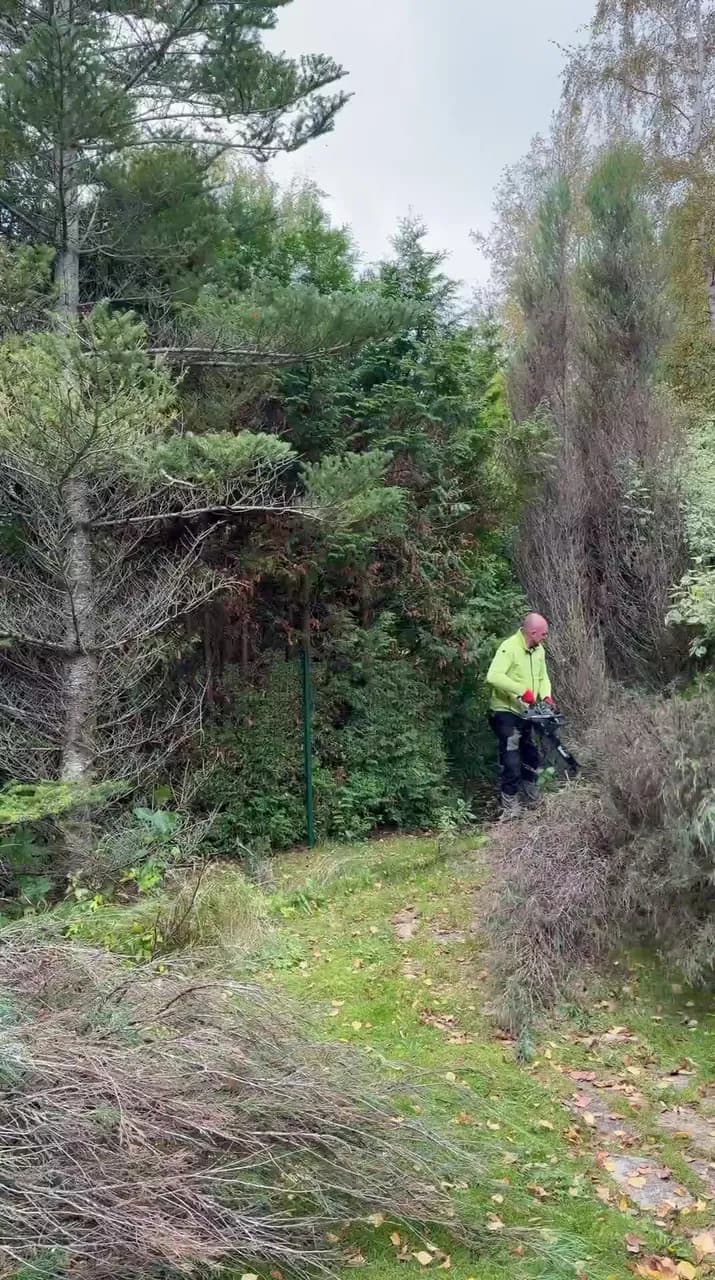
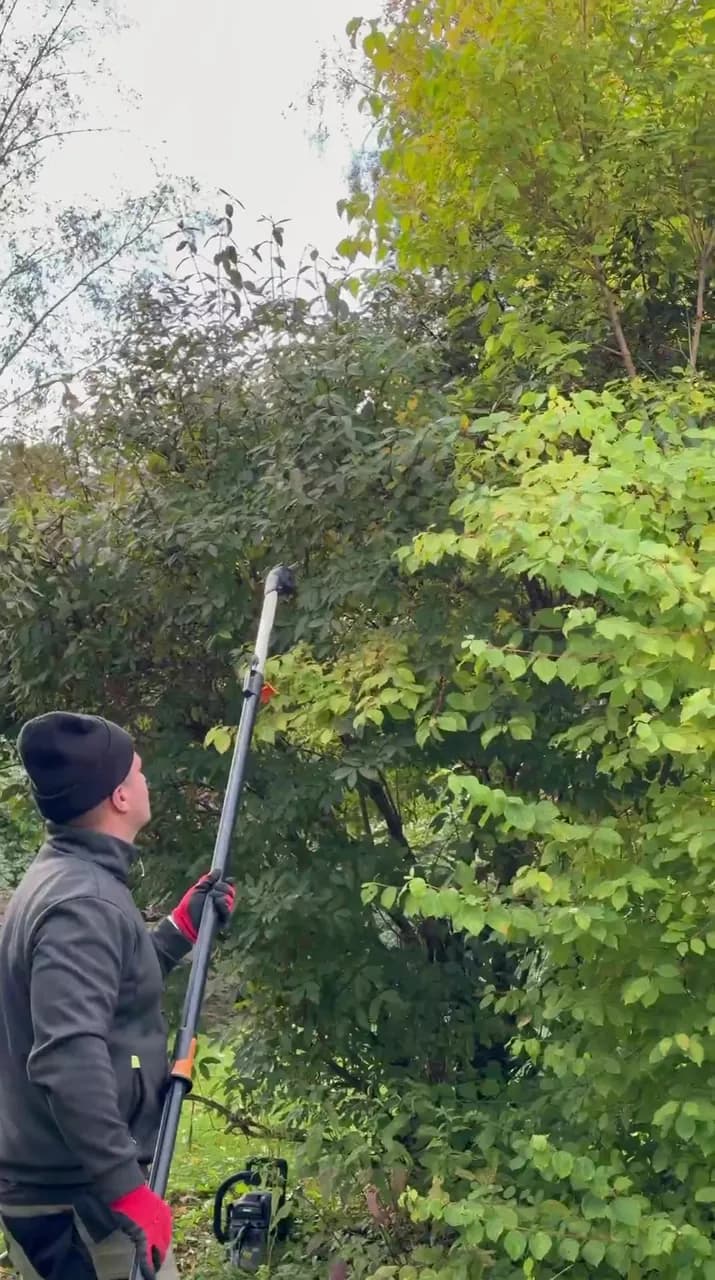
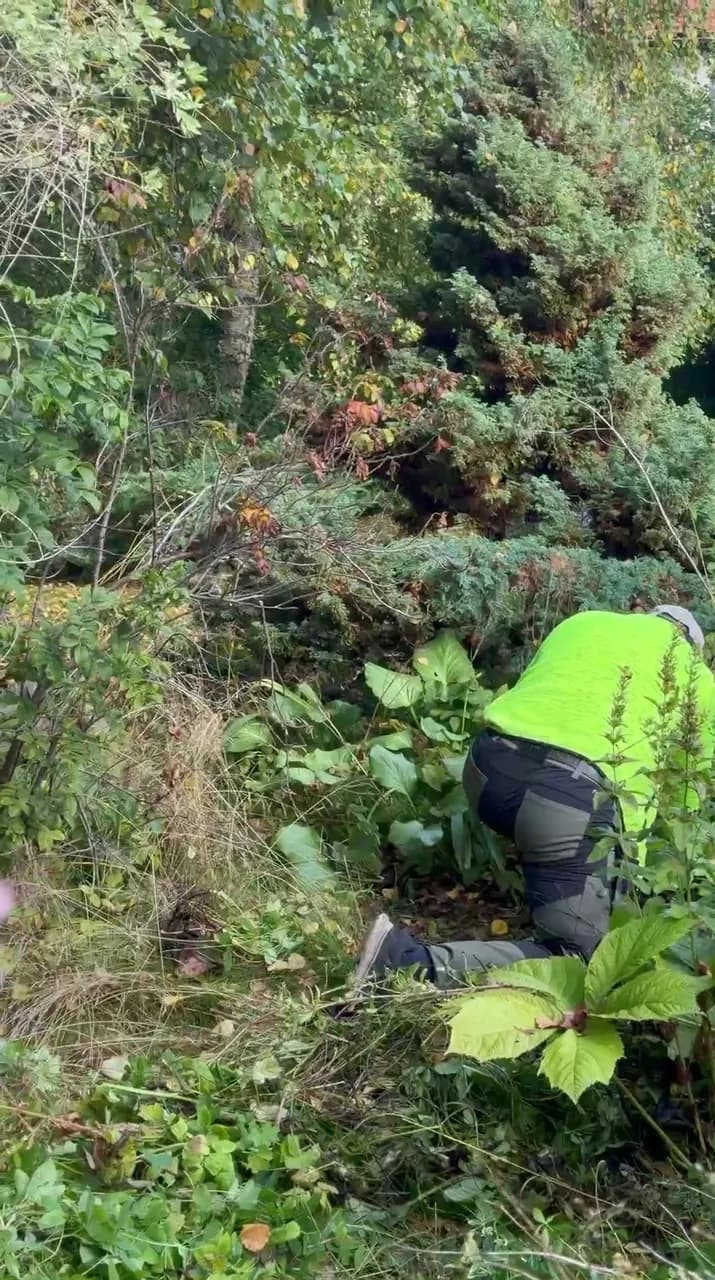
Photos from our own jobs, taken during the work and after it.