
Hedge trimming and conifer care in Tallinn and Harjumaa
Trimming thuja, spruce and deciduous hedges
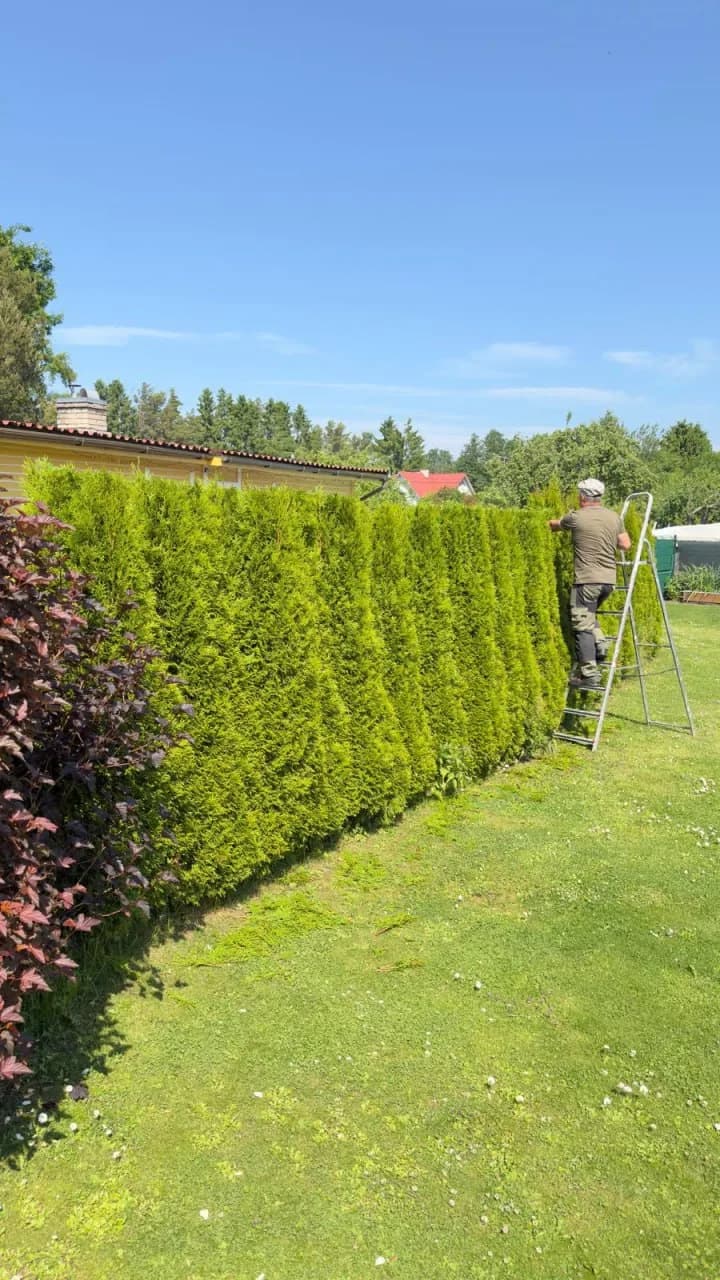
A hedge only gives a plot a crisp boundary and windbreak when it is cut at the right time and angle. Skip two seasons and the hedge shoots past eye level while the bottom turns thin and bare. With a conifer hedge, you cannot simply saw it back to size later: thuja, spruce and pine do not bud from old brown wood once the green foliage is cut away. We trim thuja, spruce, pine and deciduous hedges and care for conifers in Tallinn and Harju County.
What the service includes
- Trimming thuja, spruce, pine and deciduous hedges to an agreed height and width along a taut string line
- Shaping and candling pines and ornamental conifers
- Cutting out browned, snow-damaged and diseased branches
- Conifer fertilising and pest treatment where roots are healthy
- Collecting and hauling away all clippings via garden waste removal
Tapered profile wider at the base
Every formal hedge is cut with a tapered profile: wider at the base and narrower at the top. When the sides slope slightly inward toward the top, sunlight reaches the lowest branches all day and the hedge stays dense right down to the ground. A wide flat top shades its own base bare and catches heavy winter snow that bends branches apart. A regularly trimmed hedge rarely needs to be wider than about 60 cm.
Why conifers do not bud from old brown wood
Unlike deciduous hedges such as beech, hornbeam or privet, which push fresh shoots even after hard rejuvenation pruning, thuja, spruce and pine do not break new buds from bare brown inner wood. Cut deeper than the green needle zone and a brown patch stays bare permanently. Before starting, we check how deep the green layer is and tell you honestly how much can be trimmed safely, or whether dead sections need replacing under thuja planting and evergreen hedges. On single conifers, we also check whether browning comes from drought, road salt or fungal blight before recommending fertiliser or replacement.
Timing from April to August and bird nesting rules
Our trimming season runs from April to late August. The main cut is done in the second half of June once the spring flush has grown out, with a second trim in August so the hedge enters winter even and tight. Thuja hedges are trimmed twice a season, free-growing deciduous hedges once, and pines in late May or June by shortening new candles before needles open.
Under Estonia's Nature Conservation Act (Looduskaitseseadus), destroying bird nests and deliberately disturbing nesting birds is prohibited, and the Environmental Board (Keskkonnaamet) defines 15 April to 15 July as the peak bird nesting period. Before trimming in spring or summer, we inspect the hedge; if we find a nest, we leave that section untouched and return once the chicks have fledged.
Hedge trimming price
Pricing depends on hedge length, height and condition: a 1-metre border hedge goes quickly, while a 3-metre thuja wall requires ladders and several times more hours. We measure on site free of charge and agree a written quote beforehand (`price negotiable`). Send the length, height and last trimming date via our hedge enquiry form. See also planting thujas, trees and shrubs and tree and shrub pruning.
For seasonal tips on spiral crown tying, clearing heavy wet snow and shading young conifers in spring, see our guide on winter protection for thujas and conifers.
Common questions
How often should a thuja or deciduous hedge be trimmed?
A shaped thuja hedge needs trimming twice a season (June and August) to keep its outer shell dense, while a free-growing deciduous or spruce hedge usually needs one cut a year.
Can hedges be trimmed during the bird nesting season from 15 April to 15 July?
The law forbids disturbing nesting birds or destroying nests, so we inspect the hedge before cutting and leave any section containing a nest untouched until the young birds have flown.
Do you haul away the hedge clippings after trimming?
Yes, we catch clippings on tarps, rake the base clean and haul the material away, or combine larger loads with our garden waste removal service.
Will a browned thuja hedge recover on its own?
Bare brown wood does not regrow needles; shallow tip browning covers over from neighbouring green shoots in a season or two, whereas sections dead to the trunk need replacing plant by plant.
See our work
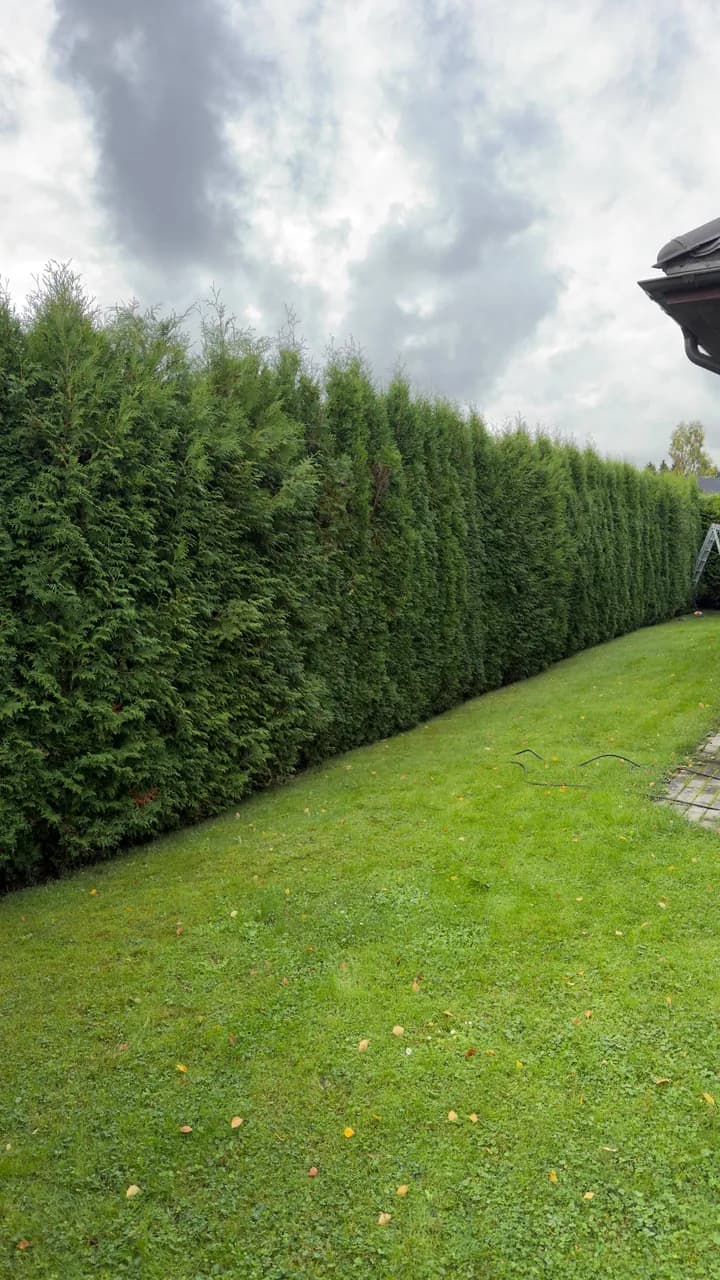
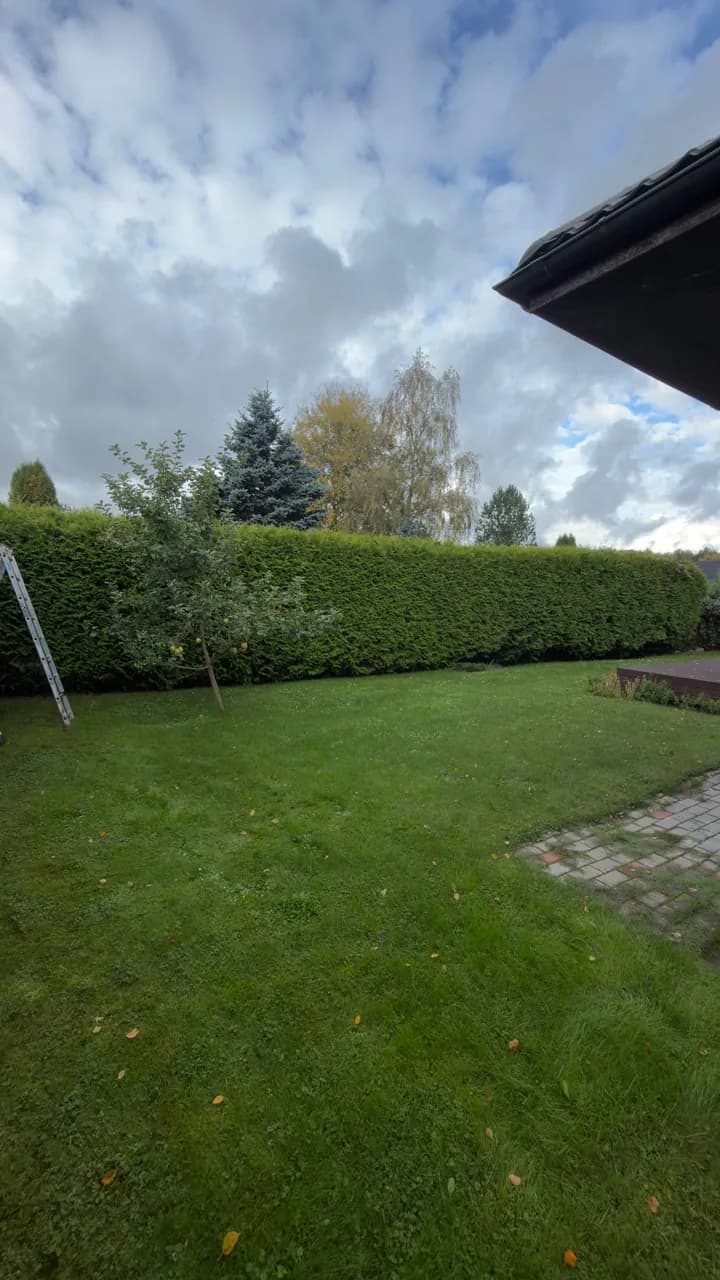
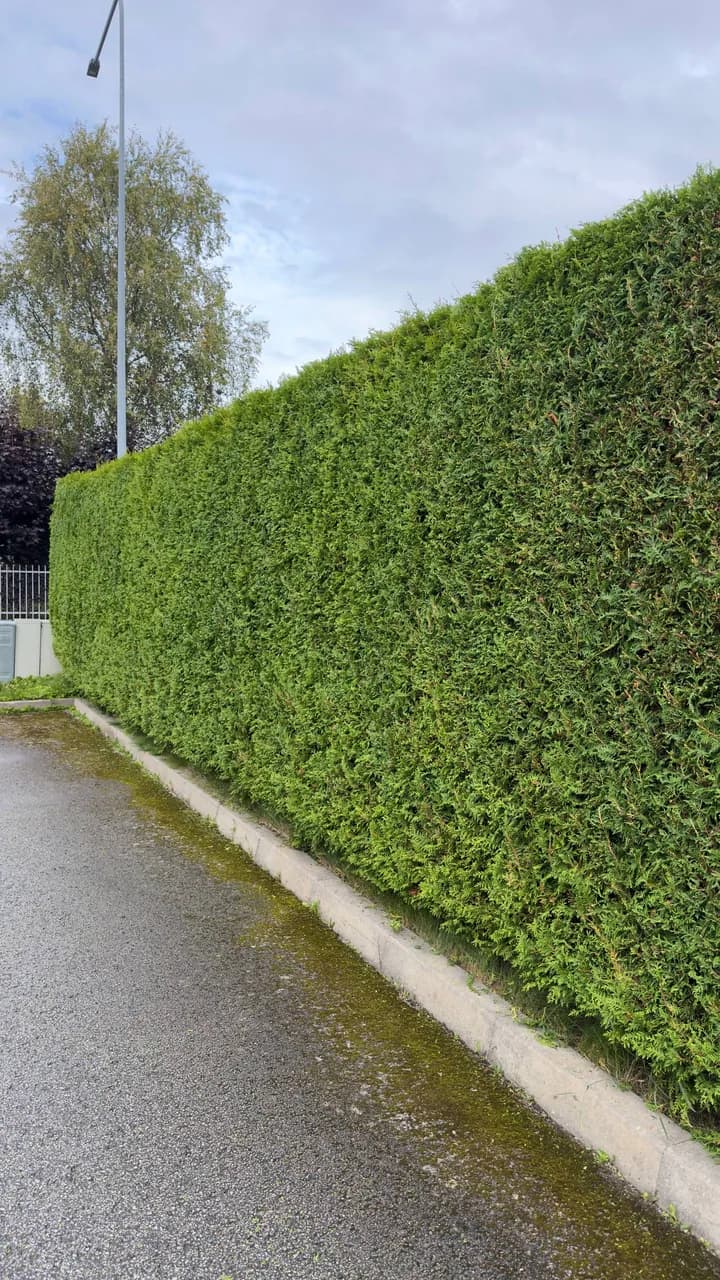
Photos from our own jobs, taken during the work and after it.
Also worth reading
BlogWinter Protection for Thujas and Conifers: Wet Snow, Tying and Spring Sunscald
How to keep thuja hedges, junipers and dwarf spruces intact through an Estonian winter: late-autumn deep watering, spiral jute tying, brushing off wet snow and fitting breathable shade mesh.
Read more