

Winter Protection for Thujas and Conifers: Wet Snow, Tying and Spring Sunscald
How to keep thuja hedges, junipers and dwarf spruces intact through an Estonian winter: late-autumn deep watering, spiral jute tying, brushing off wet snow and fitting breathable shade mesh.
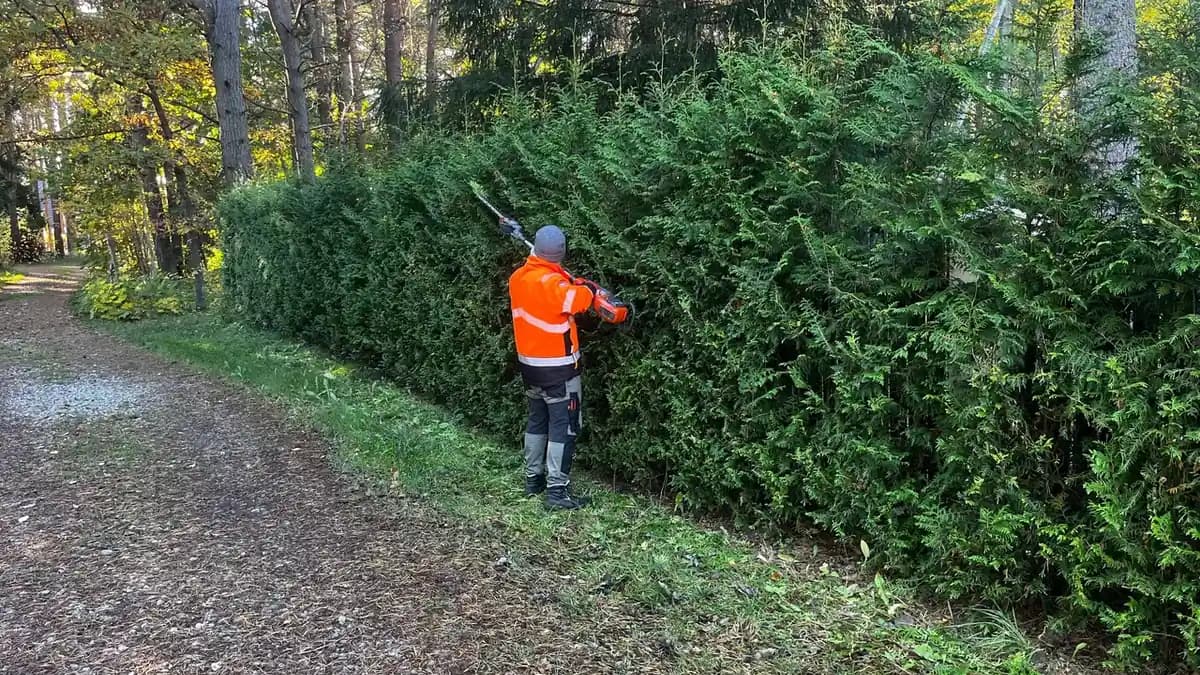
Evergreen hedges give Estonian yards year-round shelter, yet local winters hit conifers in two stages. Summer conifer and hedge maintenance focuses on clean shearing, whereas from November to March survival depends on defending crowns against wet snow and late-winter sun. Every April around Tallinn we see split 'Brabant' hedges and straw-brown young plants on south walls, even though simple autumn steps prevent most of that loss.
Two winter threats: heavy wet snow and February sunshine
The first test runs from late November through January, when coastal weather hovers around 0 to -2 °C and dumps sticky wet snow. Near the sea (in Pirita, Viimsi, Haabersti and Kakumäe and Harku parish), wet slush packs upright foliage and freezes solid. Multi-leader 'Brabant' and 'Smaragd' thujas, columnar junipers and mountain pines splay outward or split down main forks.
The second wave hits in February and March. Low sunlight reflecting off snow warms needles so they transpire water, while roots 20 to 40 centimetres down sit frozen and cannot draw moisture. That drought triggers spring sunscald, hitting wind-exposed plots in Rae parish, Saue parish and Kristiine as well as dry sandy gardens in Nõmme.
Late-autumn steps before the ground freezes solid
While soil stays unfrozen in November, three steps build resilience before winter sets in:
- Deep pre-frost watering. Give young conifers planted in the last three seasons and hedges on dry ground 15 to 20 litres per 1.5-metre shrub before hard frost locks the soil. Drainage and planting details sit under thuja planting and hedge care.
- Pine bark mulch with a clear stem ring. Spread 5 to 8 cm of coarse bark along the hedge, keeping a 5 to 10 cm bare ring around each trunk so damp bark never softens living wood. Proper mulching slows frost heave and holds autumn moisture.
- Spiral crown tying with jute twine. Wrap multi-stem thujas, upright junipers and compact pines spirally from bottom to top using soft jute twine or wide tree tape. Keep tension gentle for airflow and avoid wire or thin nylon string that girdles bark.
Before snow settles, shake out dry inner needles and finish the tasks in our winter yard and rain gutter prep checklist.
Brushing off wet snow and driveway salt discipline
After heavy snowfall, brush wet snow upward off upright branches with a soft long broom before frost locks it into ice. Below -10 °C frozen wood turns brittle, so never hit iced branches with a shovel.
Never pile ploughed driveway snow onto lower thuja branches, as settling spring crust snaps low shoots at the trunk. Road de-icing salt also burns lower foliage along drives and car parks. In our snow clearing and apartment association grounds care, crews clear along hedges with rubber-edged blades and spread washed granite grit instead of salt.
Late-winter shading: shade mesh, never white fleece
Shading matters most on south and west exposures for dwarf Alberta spruce ('Conica'), newly planted 1–3 year 'Smaragd' and 'Brabant' thujas, yews, boxwood and evergreen rhododendrons. Older deep-rooted hedges normally handle March light uncovered when autumn soil moisture is adequate.
- Set wooden stakes in November to keep an air gap. Drive support stakes before soil freezes, then pin up green UV-stabilised shade mesh (40–60%) or breathable jute burlap in late January or early February. Keep a 5 to 10 cm gap around shoots — fabric tied tight onto needles freezes wet and chafes foliage in wind.
- Avoid white frost fleece and plastic sheeting. Fleece and polythene trap daytime solar heat, causing condensation, needle cook and fungal blight.
- Remove shade screens in cloudy April weather. Wait until soil has thawed completely and unpin mesh on an overcast day to prevent light shock.
If winter still leaves brown shoots, our guide on why thuja turns brown helps verify live wood before pruning, or you can hand over tying, shading and snow care under a garden maintenance contract.
Common questions
Can white frost fleece or plastic sheeting be used on conifers in winter?
No. White fleece traps warmth and creates a humid greenhouse effect on sunny winter days, overheating needles while roots sit frozen and sparking fungal twig blight. Use only breathable green shade mesh or jute burlap mounted on stakes with an air gap.
When should thuja crowns be tied and shade-frame stakes driven in?
Tie multi-leader thujas and junipers in November using soft jute twine while branches flex easily and before heavy snow lands. Drive support stakes into unfrozen soil in late autumn too, then fit the shade mesh in late January or early February.
Do mature four-year-old thuja hedges still need winter shade netting?
Established hedges over three or four years old usually have roots deep enough below frost to withstand March sun uncovered, provided autumn watering soaked the root zone. Reserve shade netting for 1–3 year hedges, 'Conica' dwarf spruces and yews in sunny spots.
What if heavy wet snow has already bent thuja branches apart?
Never pull frozen stems back by force, as cold bark splits easily. Brush loose snow gently upward with a soft broom and wait for mild above-zero weather before drawing splayed branches back together with soft tree tape or jute twine.
Hedge trimming and conifer care
We visit your site, assess the scope and send a written offer. Free of charge and with no obligations.