

Tree Felling in Autumn and Winter: Permit Rules and Why Not to Wait Until Spring
Late autumn and winter are the best months to remove hazardous or overgrown trees: crowns are bare and lighter, ground is firm and bird nesting restrictions do not apply.
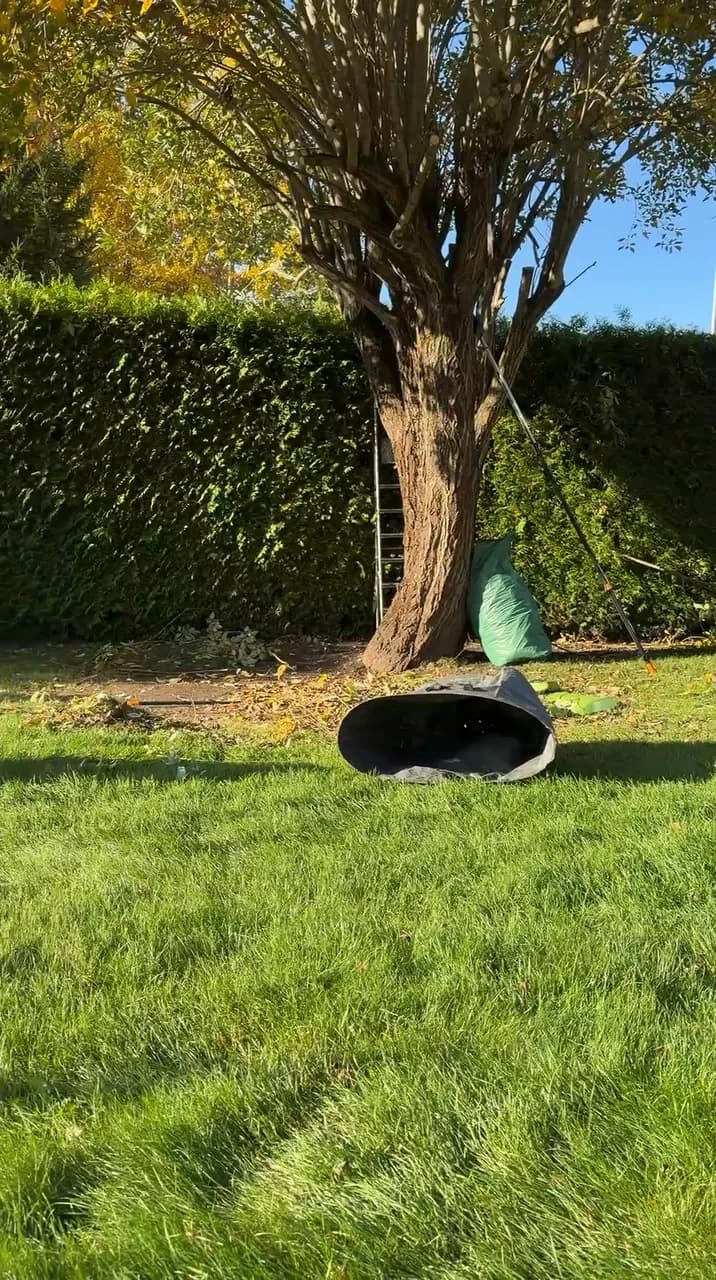
Every October and November, coastal storms expose hidden structural defects in mature garden trees: split forks masked by summer foliage, butt rot in old birches and pines or heavy limbs leaning over roofs and power lines quickly become an immediate hazard. From an arborist's standpoint, late autumn and winter are also the safest and cleanest season for tree felling and crown reduction.
Why Autumn and Winter Are Ideal for Tree Felling
- Bare crowns are lighter and easier to inspect: deciduous trees (birch, maple, oak, ash, poplar, lime) have shed their leaves, reducing weight and wind resistance while letting the climber see every dead branch, fungal bracket and stem crack clearly.
- Outside the spring bird nesting window: from April to mid-July, bird nesting rules frequently delay tree work. Between November and March, felling can proceed as soon as the permit is issued.
- Firm or frozen ground protects lawns and paving: once soil firms up in the cold, neither compact machinery nor rigged timber sections leave deep ruts in established turf, and perennial borders are dormant — a major advantage in mature gardens in Nõmme, Pirita, Kristiine and Viimsi.
Four Warning Signs to Check on Your Trees Before Winter Storms
Once the leaves have dropped in autumn, walk around your plot and check large trees for four common structural hazards:
- Tight V-shaped twin stems (included bark): where two main leaders meet at a narrow angle, bark gets trapped inside the union and one stem can easily split away under wet snow or gale-force wind.
- Fungal brackets on the trunk or root flare: fruiting bodies at the base or along the stem indicate internal heartwood decay even if the canopy still leafed out in summer.
- A fresh lean or heaving turf around the roots: if waterlogged autumn soil has cracked or lifted on the windward side, the root plate has begun to shift.
- Dead top branches or heavy limbs extending over roofs, driveways or overhead cables: these are the first to fail during freezing rain and early snowfalls.
When You Need a Felling Permit (Raieluba) in Tallinn and Harjumaa
In densely built-up areas, you cannot cut down a mature tree without municipal permission even on private land:
- The 8 cm rule in Tallinn: a felling permit is required whenever the trunk diameter at breast height (measured 1.3 metres above root flare) is 8 cm or more. The same threshold applies across most Harjumaa parishes (Harku, Rae, Saue). For multi-stemmed trees, stems are measured according to the local municipal ordinance.
- When no permit is needed: permits are not required for fruit trees (apple, pear, plum, cherry) or berry bushes. You can schedule fruit tree felling or fruit tree pruning right away.
- Storm damage and emergencies: if a tree has cracked in a storm, lifted its root plate or lodged against another tree and poses an immediate threat to a building, power line or road, take photographs and submit an urgent notification to the Tallinn Environment and Communal Department or your parish government.
How Sectional Felling Works in a Tight Garden
On an urban plot there is rarely room to fell a tree in one piece from the base — greenhouses, fences, thuja hedges, heat pumps and neighbouring roofs stand in the way. Instead, the tree is dismantled section by section:
- The arborist climbs into the crown on ropes or works from an aerial lift where driveway access allows.
- Branches and 50–100 cm trunk sections are cut from the top down and lowered smoothly on friction-braked rigging ropes without damaging turf, decking or pavers.
- Afterwards, stump grinding removes the stump 15–25 cm below grade so new grass or plants can go in next spring, and all branches and logs are cleared via garden waste removal.
Frequently asked questions
How long does it take to get a tree felling permit in Tallinn?
Standard processing by the Tallinn Environment and Communal Department takes 10 to 30 days, as an officer may inspect the tree on site. We measure the trunk, take the required photos and prepare the application so it passes without delays.
Can stumps be ground in late autumn and winter?
Yes. A stump grinder cuts through frozen wood without issue, and firmer winter ground means the compact machine crosses your lawn without leaving wheel ruts.
What happens to the branches and trunk logs after felling?
If you burn firewood, we can buck the trunk into stove-length rounds and stack them by your shed; otherwise we chip the branches and haul away all timber and stump grindings ourselves.
Tree felling and hazardous tree removal
We visit your site, assess the scope and send a written offer. Free of charge and with no obligations.