
Tree felling permit in Tallinn and Harjumaa
We prepare the details for your raieluba application and fell the tree safely once the permit is granted.
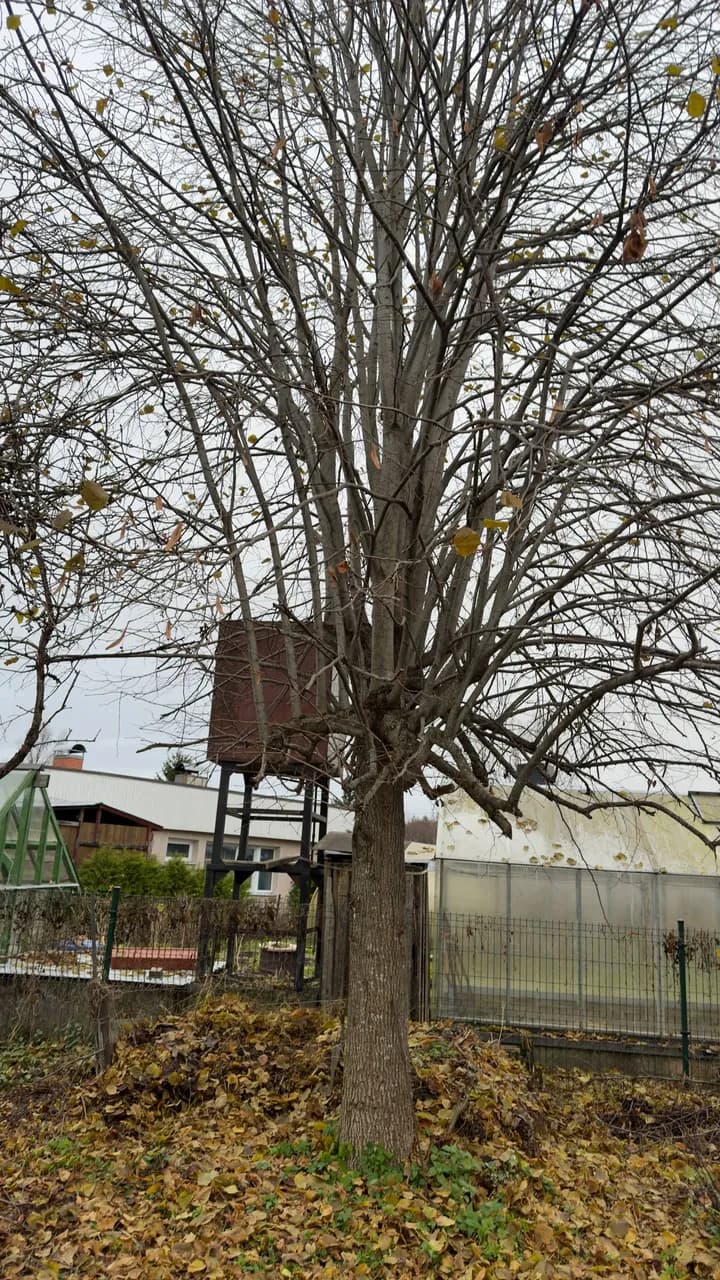
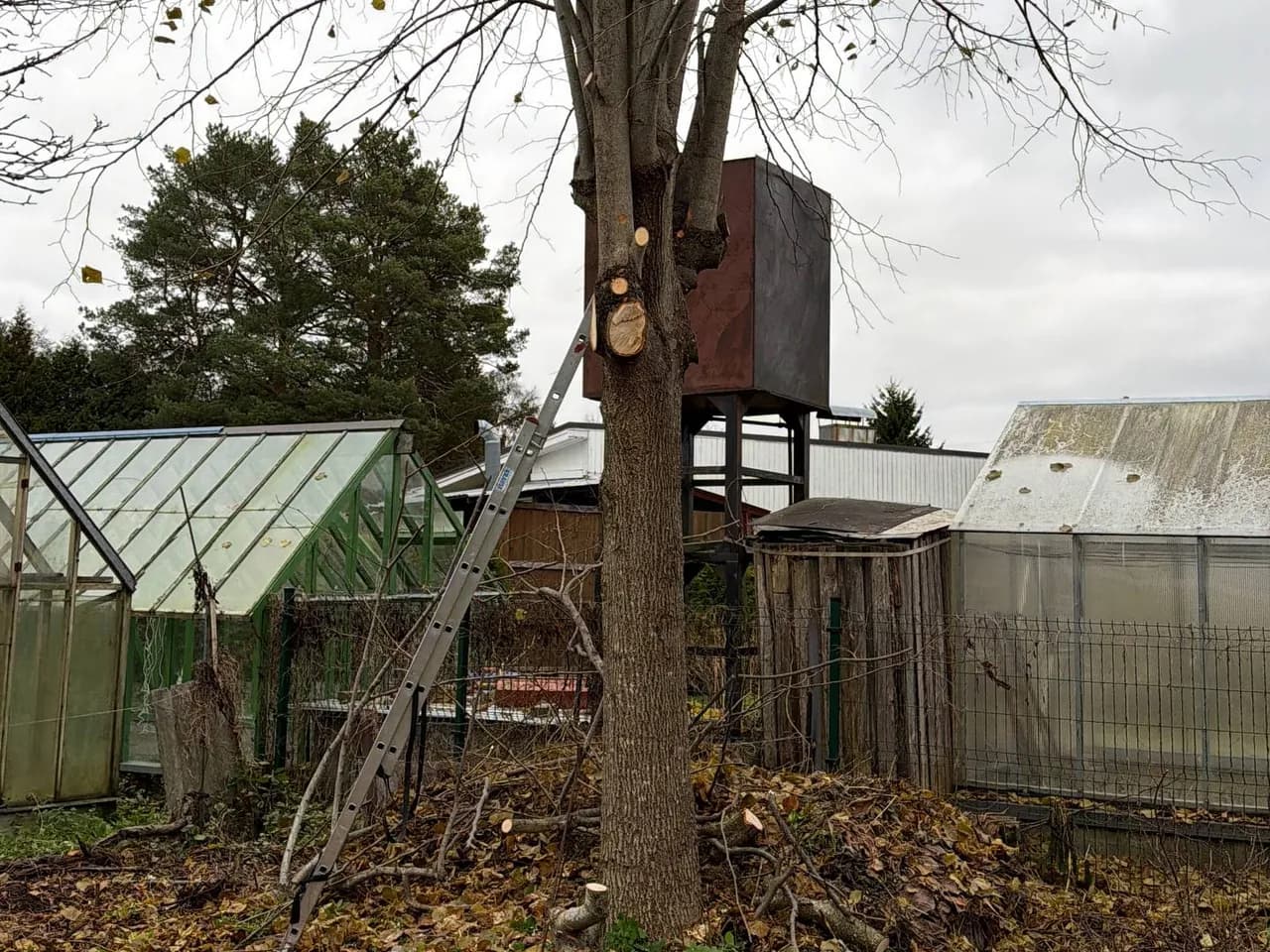
Before taking a chainsaw to a mature tree on a residential plot in Tallinn or Harju County, you need to check the local municipal felling rules. Under Estonian law, the property owner is legally responsible for any tree felled without a required felling permit (raieluba), even if a hired contractor carried out the cutting. We visit plots across Tallinn (including Nõmme, Pirita, Kakumäe and Kristiine) and Harjumaa (Viimsi, Harku, Saue and Rae), measure trunk diameters, assess tree health, prepare the technical inputs for your application and dismantle the tree safely once permission is granted.
When a tree felling permit is needed in Tallinn and Harjumaa
In Tallinn, felling permits are issued by the Tallinn Environment and Communal Department (Tallinna Keskkonna- ja Kommunaalamet) under the city council's tree felling and maintenance pruning regulation. Whether you need a permit on a private plot depends first on trunk thickness: a permit (raieluba) is generally required for any tree with a trunk diameter of at least 8 cm measured at 1.3 metres above the root collar (known in the regulation as rinnasläbimõõt). Trees thinner than 8 cm at 1.3 m do not require a permit in Tallinn, unless the tree was planted earlier as mandatory replacement planting (asendusistutus).
Two major exceptions apply. First, Tallinn's regulation does not govern shrubs or fruit trees (apple, pear, plum and cherry trees whose cultivar is listed in the variety register), so an old orchard tree on your own plot can be removed without municipal paperwork regardless of trunk thickness. Second, if a tree has split in a storm, uprooted partially or poses an immediate acute threat to a building or people, you do not wait for a regular permit; instead, you must notify Tallinna Keskkonna- ja Kommunaalamet immediately in writing with photographs proving the hazard and obtain the department's consent. By contrast, a standing dead or decaying tree that is not in immediate danger of falling still requires a sanitary felling permit (sanitaarraie). Each surrounding municipality in Harjumaa — such as Viimsi, Harku, Saue and Rae — enforces its own local ordinance and spring-summer bird nesting restrictions (§ 55 of the Nature Conservation Act).
How the permit process and replacement planting work
Obtaining a tree felling permit follows a clear sequence:
1. Measurements and electronic application. The property owner (or an authorised representative) submits an application through the Tallinn tree permit information system or the local municipality's self-service portal. The form requires the tree species, number of trees, trunk diameter at 1.3 m, location on the site plan, the reason for removal and clear photographs. For an apartment association (KÜ), the general meeting or board resolution is attached. 2. Dendrologist or environmental specialist assessment. A municipal official or dendrologist reviews the submission and inspects the tree on site to determine its health and value class. Depending on the findings, the felling is classified as sanitary felling (sanitaarraie for dead, dying or severely rotted trees), maintenance felling (hooldusraie), formative landscaping felling (kujundusraie), construction felling (ehitusraie) or felling of a damaged tree. 3. Replacement planting (asendusistutus). When a healthy tree or a tree damaged by human activity is removed for building works or garden redesign, the city can attach replacement planting (asendusistutus) as a condition of the permit. The required number of landscaping units (haljastusühikud) is calculated from the felled tree's species, trunk diameter and value class. Sanitary felling of a dead or diseased tree generally carries no replacement planting obligation.
How Evergreen Yard helps from inspection to haulage
Applications are most often delayed because the trunk was measured at the wrong height, the species was misidentified or the photographs fail to show structural rot or foundation damage. Our arborist visits your property beforehand, measures the trunk at 1.3 m, checks for root rot, fungal brackets, splits and lean, and tells you candidly whether the tree qualifies for sanitary felling, an emergency hazard notice or crown reduction. We put together the exact figures, species names and photographs you need to submit the application smoothly.
Once the permit is issued, our crew carries out tree felling and hazardous tree removal: directional felling where space allows, or sectional rope rigging where branches overhang roofs, greenhouses, fences or power lines. After the trunk is down, we can complete the job with stump grinding and haul away brushwood and logs under our garden waste removal service. If your permit includes replacement planting, we can supply and plant the required trees through our plant sourcing and delivery and tree and shrub planting services.
Processing timelines without guesswork
Processing time depends on the local authority, seasonal workload and the type of felling. Under Tallinn's rules, standard permit proceedings typically take up to 30 days, so it is sensible to allow several weeks and factor in extra waiting time during the spring and summer bird nesting season. For an acutely dangerous storm-damaged tree, the Tallinn department responds to a formal hazard notification within one working day, after which the tree must be removed within ten days. We do not make promises on behalf of municipal officials about approval dates, and we schedule the cutting crew as soon as your permit or written consent is in hand. Send us your details via the contact form to book an on-site assessment.
Common questions
Do I need a permit to cut down a tree on my own private plot in Tallinn?
Yes, if the trunk diameter measured 1.3 metres above the root collar is 8 cm or greater, or if the tree was planted as replacement planting. You do not need a permit on a private plot for shrubs, registered fruit tree cultivars or young trees under 8 cm in diameter.
Can I cut down a dead or storm-split tree immediately without a permit?
A standing dead tree that is not about to fall right away still requires a sanitary felling permit before cutting. If a tree has cracked in a storm and poses an immediate threat to a building or passers-by, you must send an urgent written notification with photographs to Tallinna Keskkonna- ja Kommunaalamet and wait for their confirmation.
Who submits the application and does the municipality charge a fee?
The application is submitted by the property owner, an apartment association board member or an authorised representative. Reviewing the permit application itself is free of state fees, though removing a healthy tree for construction or redesign may entail replacement planting costs.
How long does a tree felling permit remain valid?
In Tallinn, a felling permit is valid for one year from the date of issue. That gives you time to schedule the work outside the spring bird nesting window or wait for firm winter ground.
What happens if a tree is felled without a permit?
Unauthorised felling breaches municipal maintenance ordinances and the Nature Conservation Act, and liability rests with the landowner. Beyond a fine, the municipality can require compensation for environmental damage or retrospective replacement planting.
Other services in this area
Tree felling and hazardous tree removal
We fell in tight spots, in sections, without damaging the roof or the fence.
See our work
Photos from our own jobs, taken during the work and after it.