Landscaping works
From a bare plot to a finished garden: ground, services, paving, lawn and planting.
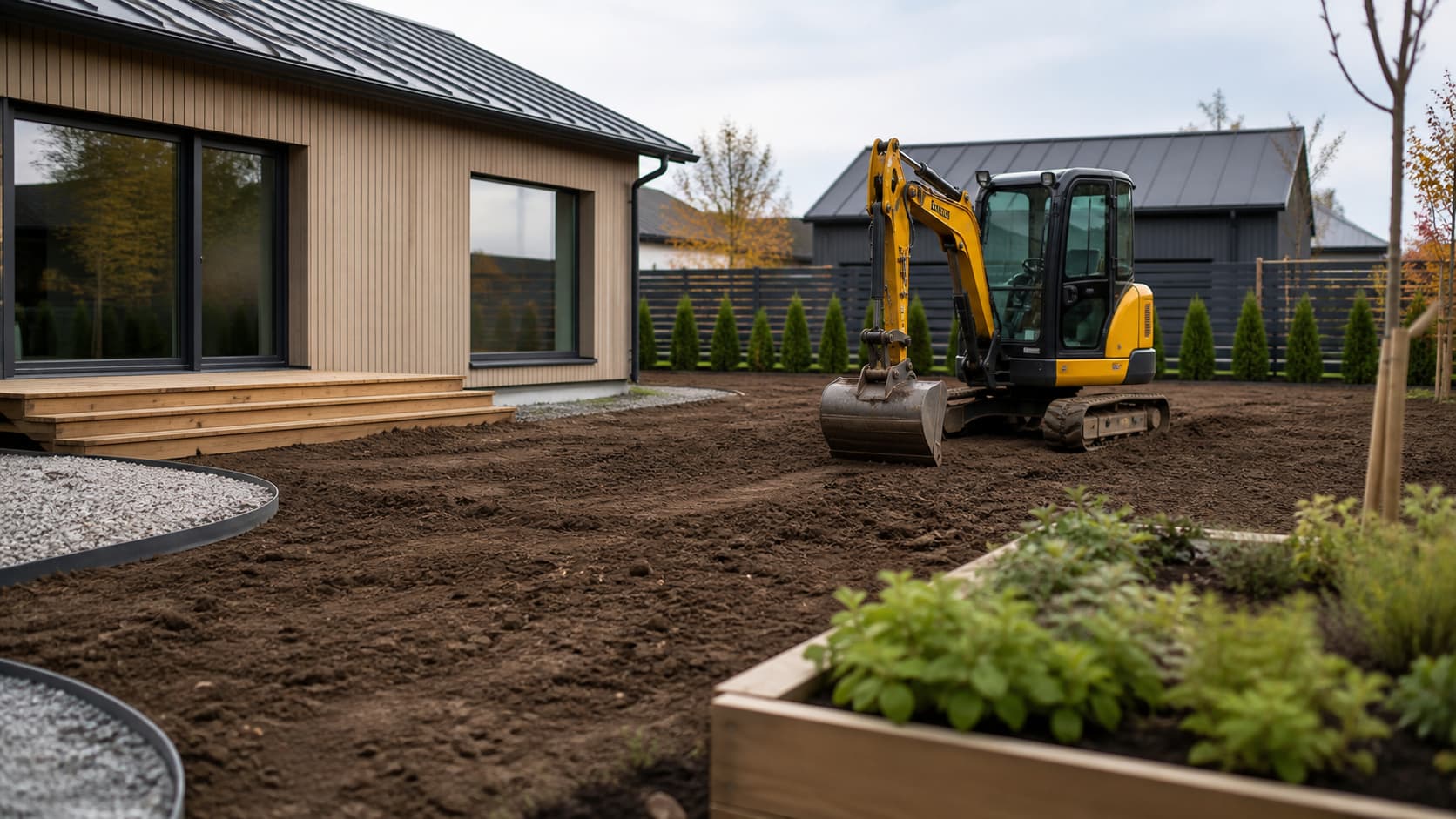
Landscaping usually starts from one of two situations. Either a new plot, where the house is finished and the yard is still construction ground, or an old garden that has grown over the years and needs its shape back. Both follow the same logic: first everything that goes under the ground, then the surfaces, and only at the end the plants. We work for private and commercial clients in Tallinn and Harju County.
What landscaping covers
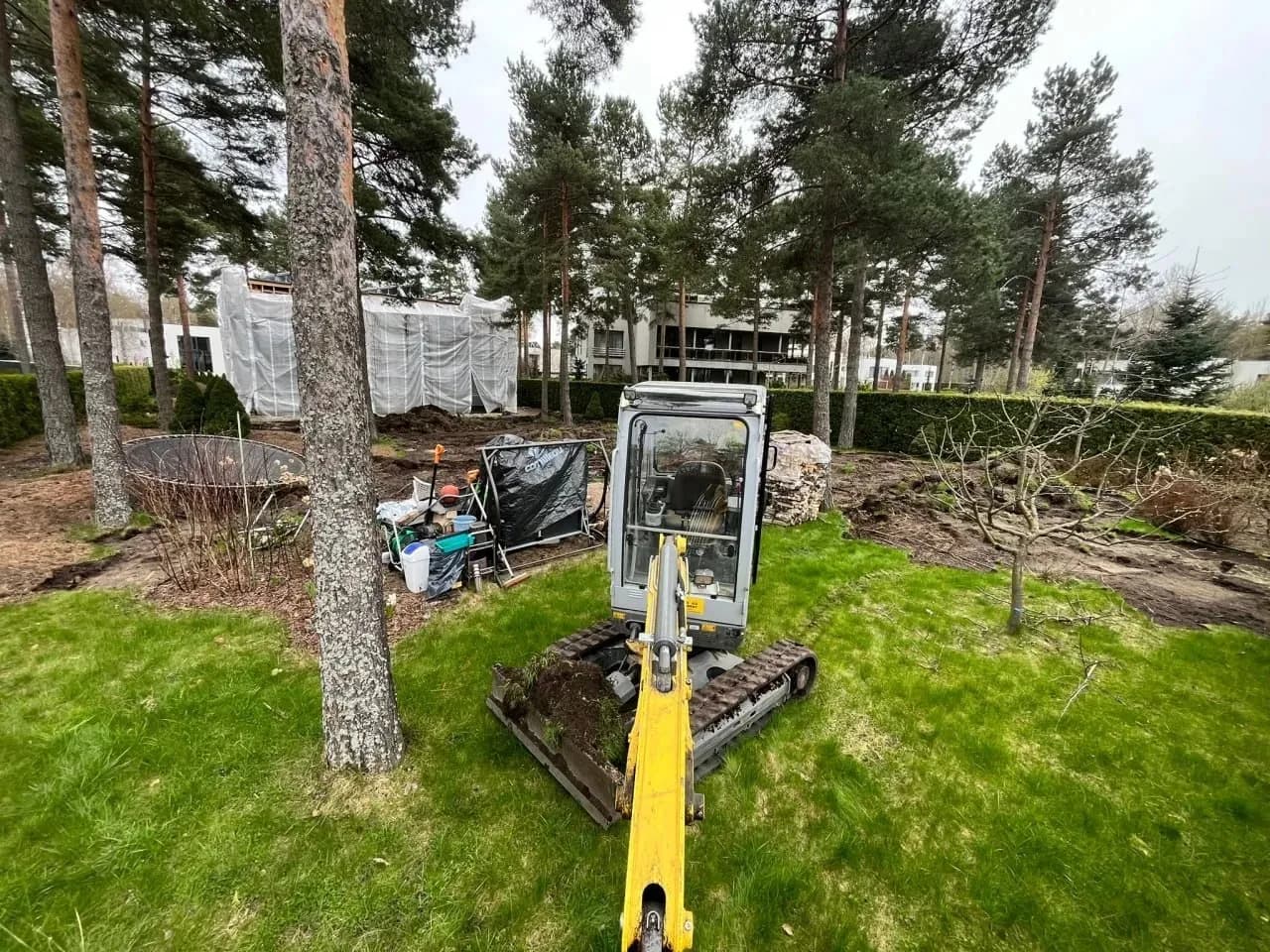
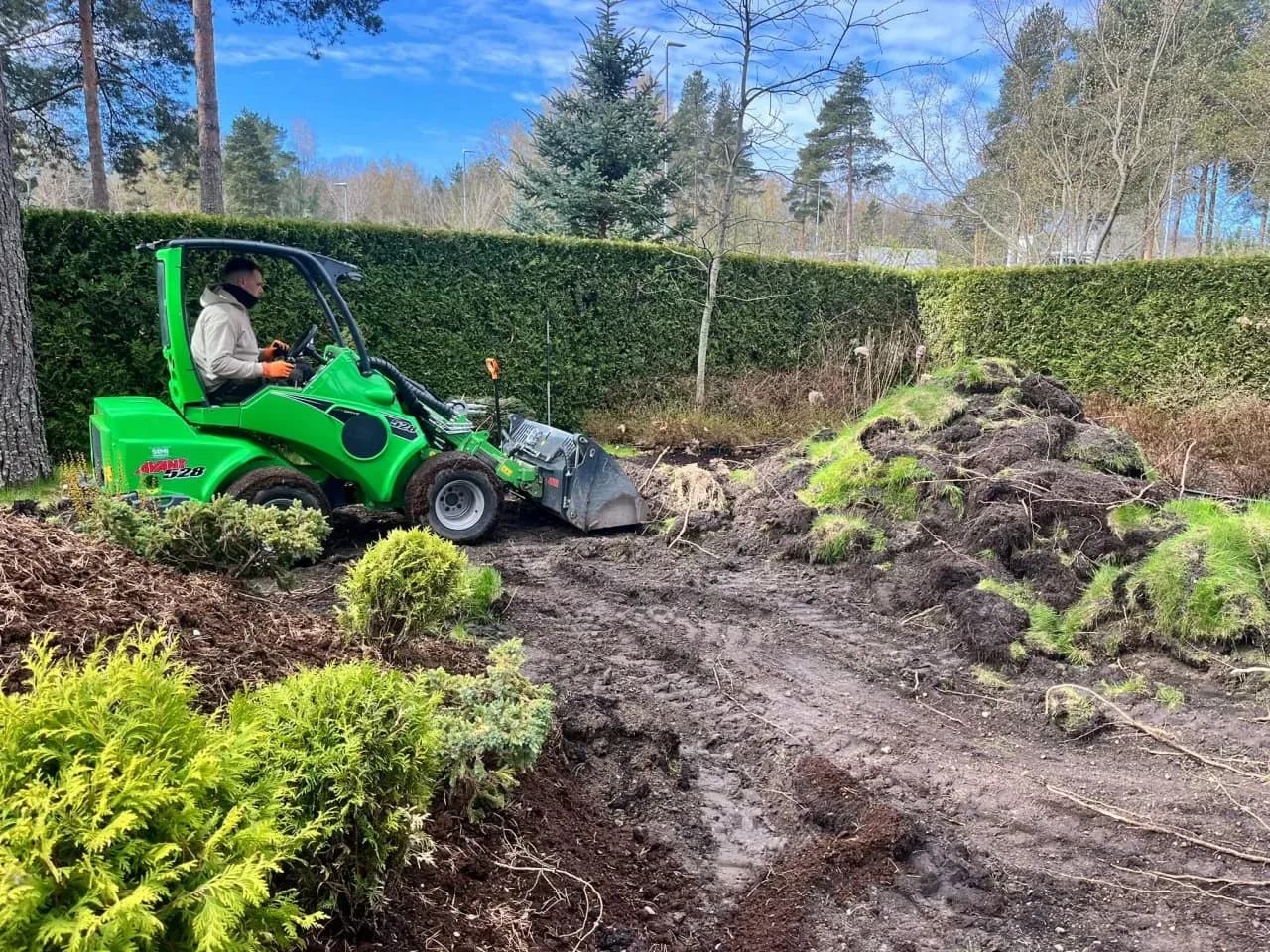
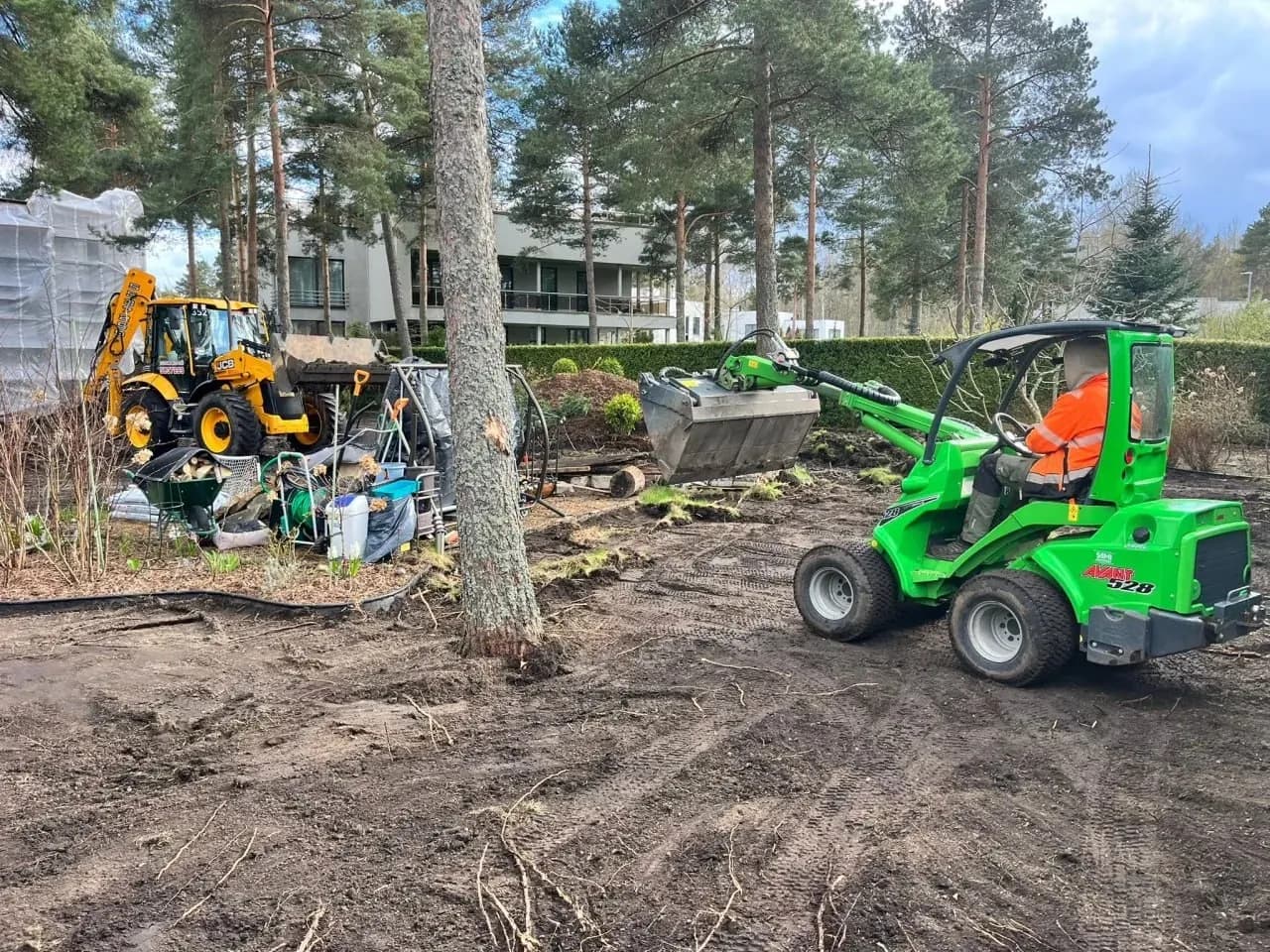
- Groundworks: old sod removal, excavation, falls and ground levelling
- Underground services: irrigation, lighting, stormwater drainage
- Paths and yards, meaning paving installation with a proper base and kerbs
- Lawn: rolled turf or seeding
- Plants: trees, hedge plants and shrubs and flower beds
- The maintenance that keeps the result: lawn mowing and care, hedge trimming, seasonal clean-ups
The order of work decides the cost
The most expensive mistake in a garden is opening a finished surface. Cables, irrigation pipes and the stormwater solution go in during the base stage, not after the lawn is sown and the paving is laid. If the irrigation system arrives a year later, what gets dug up is exactly the work that was already paid for once.
The order that works is simple: excavation and falls, then services, then the paving base and paving, then topsoil and lawn, and planting with mulch last. On a large plot we split the job into stages and spread them across seasons, but the order stays the same even when a whole winter falls in between.
What can be done in which season
Groundworks and paving need thawed, drained ground: a frozen or waterlogged base cannot be compacted. Lawns are sown and turf is laid during the growing season, because new grass needs watering and time to root.
Hedge and tree work is timed around birds. The Nature Conservation Act prohibits destroying nests and deliberately disturbing birds, and the Environmental Board treats 15 April to 15 July as the peak nesting period, so during those weeks we check the hedge before trimming and leave any section with a nest untouched. The details are on the hedge trimming and conifer care page.
Autumn and winter are not empty months in a garden: leaf clearing, stump grinding, scrub clearance and snow clearing. Much of the construction side is in fact easier to plan for autumn, once the spring queue is over.
A new plot and an old garden are different jobs
On a new plot the main issue is the construction ground: building debris, strips compacted by machinery, the wrong fall along the house. Until that is fixed, water stands at the foundation and the lawn grows in patches.
In an old garden the main issue is deciding what stays and what goes. We look at which trees and shrubs are healthy and worth keeping, what has grown past its boundaries and what has to come out. Often a large part of the garden can be saved with pruning and soil repair, without rebuilding everything, and we say so when that is the case.
What landscaping costs
The price depends on the area, access to the site, how much soil is moved and hauled away, the quantity of materials, and whether the work is done in one go or in stages. A narrow inner courtyard where no machine fits takes more hours per square metre than an open plot.
Always ask for the quote in writing, with work volumes in units, material quantities, the haulage volume and a deadline. That is what makes two quotes comparable and keeps extra work from turning into a surprise. We come to the site, measure it and write the quote free of charge.
We quote on request. In the enquiry form, give the approximate size of the plot and say whether you want an offer for the whole garden or for one part at a time.
Common questions
Where do I start with a completely bare plot?
On paper. Once you know where the paths run, where the parking goes, where the lawn is and where the planting is, the excavation only has to be done once. That is what landscape design and site planning is for.
Can the work be done in stages?
Yes, and often it is the sensible route. We divide it so that each stage is a finished result in itself and the next one does not require tearing up the last. Services and bases always belong to the first stage.
Do you maintain the garden after building it?
Yes. Most clients continue with a maintenance contract: mowing to a schedule, hedges, spring and autumn clean-ups. A new lawn and fresh plants need the most attention in their first season, and that is when it is decided whether the money was well spent.
Do you haul away the old soil and green waste?
Yes, garden waste removal is part of the job. Garden and landscaping waste goes either into the client's own composter, into a bio-waste container, or to a site with an environmental permit; the waste rules allow no other route.
Do you work for apartment associations and commercial properties?
Yes. With housing associations we usually agree a year-round schedule: spring clean-up, mowing, hedges, leaves and snow in winter. On a commercial property the work normally has to happen outside the client's busy hours, and that goes into the contract.
See our work
Photos from our own jobs, taken during the work and after it.