
Why thuja turns brown and how to save it
Brown thuja branches are not always a death sentence. Six causes — from winter burn to fungus — and what to do in each case.
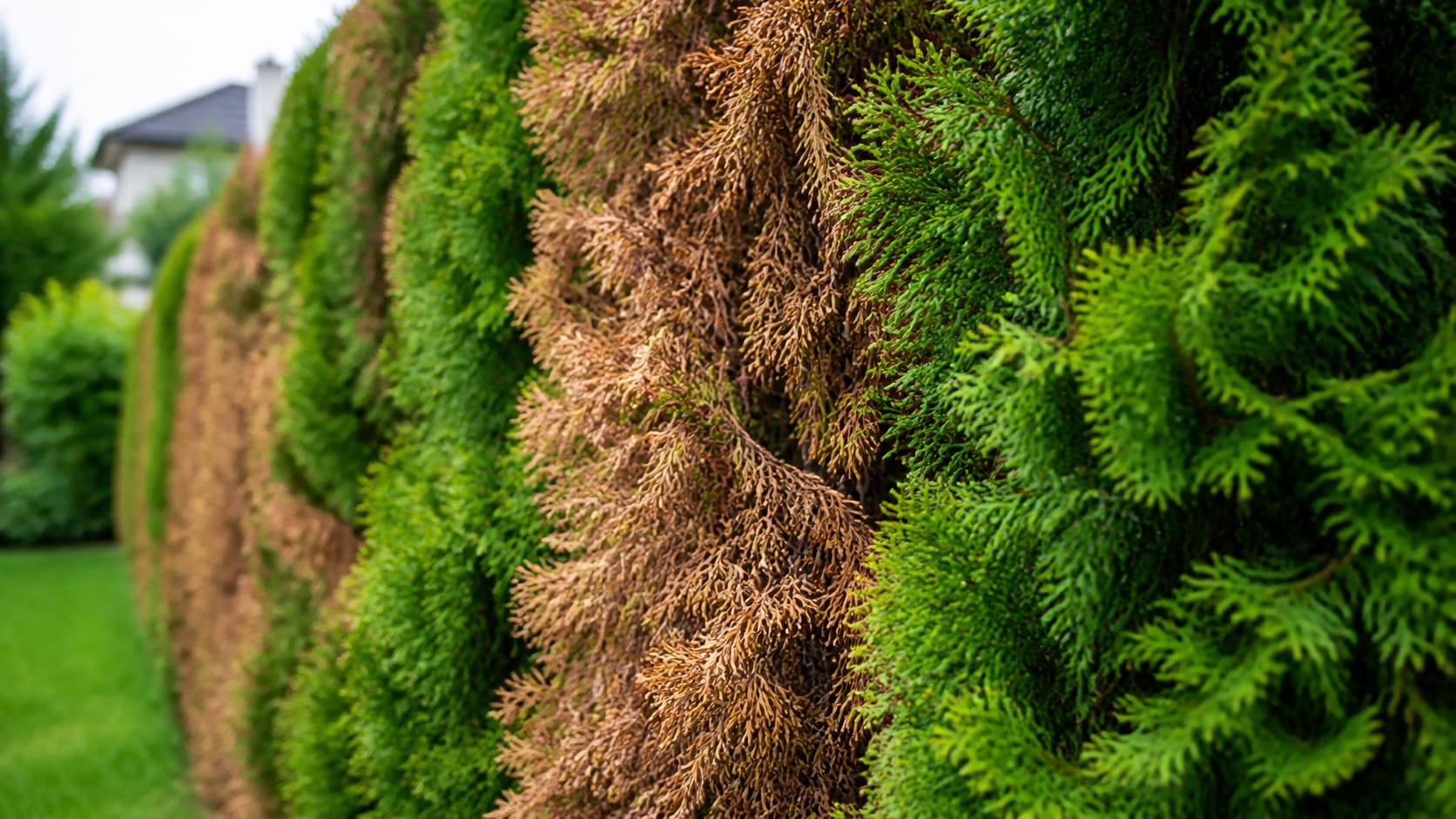
Thuja is the most popular hedge plant in Estonia, and “why is it turning brown” is the question we hear more than any other. The good news: in most cases the plant can be saved.
Natural browning inside the crown
If old needles brown inside the crown in autumn, that is normal needle shed. Worry when tips and young shoots turn brown.
Winter burn: the main enemy
In February–March bright sun evaporates moisture from the needles while frozen roots cannot replace it. Result — rusty patches on the south side. Prevention: deep watering in autumn before frosts and shade netting for the first 2–3 winters after planting.
Lack of water in the first years
A young thuja with still-weak roots dries out fast. Water regularly for the first two seasons — 10–15 litres per plant per week in dry weather.
Road salt
If the side of the hedge facing a road or path that is salted in winter is browning, salt is the cause. In spring flush the soil with plenty of water and switch to granite chips.
Fungal disease
Patchy browning branch by branch can be fungal — for thujas the RHS names thuja blight and Coryneum canker.
What to do with browned branches
Wait until early summer: some branches may recover. Cut fully dead branches back to live wood. Thuja does not fill in from old wood, but neighbouring branches gradually close the gap.
Unsure of the diagnosis? Send a photo or book an inspection: we will identify the cause and draw up a recovery plan.
We can do this work for you: thuja care.
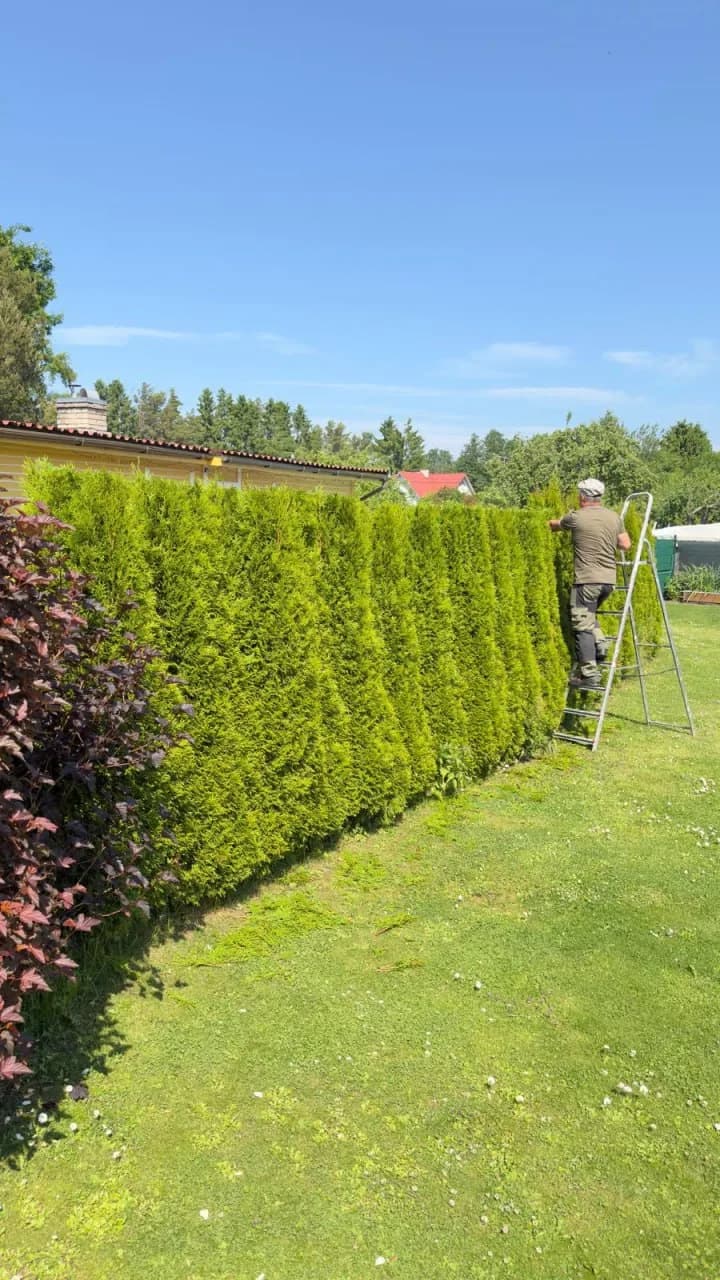
Thuja planting and evergreen hedges
We visit your site, assess the scope and send a written offer. Free of charge and with no obligations.