
Which paving to choose: concrete, granite or clinker
Paving is laid for decades, so the wrong material choice is expensive. An honest comparison of the three main options.
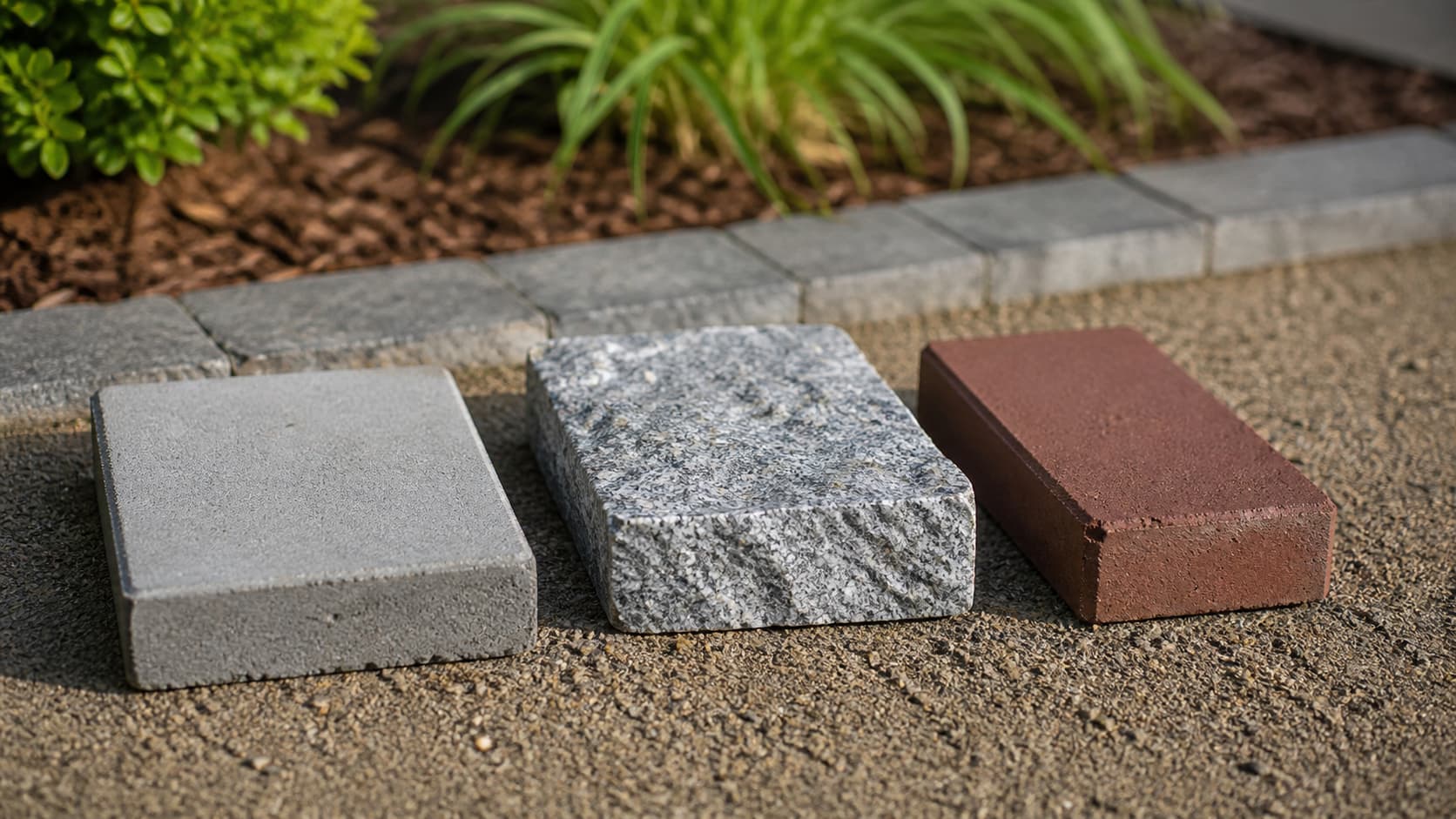
The paving material decides not only how the yard looks but how much you will spend on care for the next twenty years. Here are the three main options.
Concrete pavers: the workhorse
The most popular choice: wide range of shapes and colours, reasonable price, simple install and repair. Downsides: colour fades over time and the surface absorbs oil and dirt more than natural stone. Service life 20–30 years. For driveways take thickness from 60 mm; for paths 40–50 mm is enough.
Granite: built for a century
Granite paving is practically eternal: it does not fade, does not fear salt or frost, and chips only add character. Downsides: price 2–3 times higher than concrete and more expensive installation. A sensible compromise — granite on the representative zones (entrance, terrace), concrete on the technical ones.
Clinker: warm classic
Fired clay holds its colour for decades and ages beautifully. Strength is close to granite; so is the price. Clinker is loved for its characteristic warm red-brown range, which pairs well with brick houses.
What matters more than the material
Any paving will wave within one winter if the base is poorly built. A proper build-up of crushed stone and sand with layer-by-layer compaction matters more than choosing between concrete and granite.
We bring material samples to the site so you can see how the stone looks next to your house in your light. A turnkey cost estimate is free.
If you would rather leave the work to professionals, see our service: paving installation.