
Moss in the lawn: why it appears and how to get rid of it
Moss is not the cause but the symptom. Before fighting it, you need to understand why moss grows in your lawn in the first place.
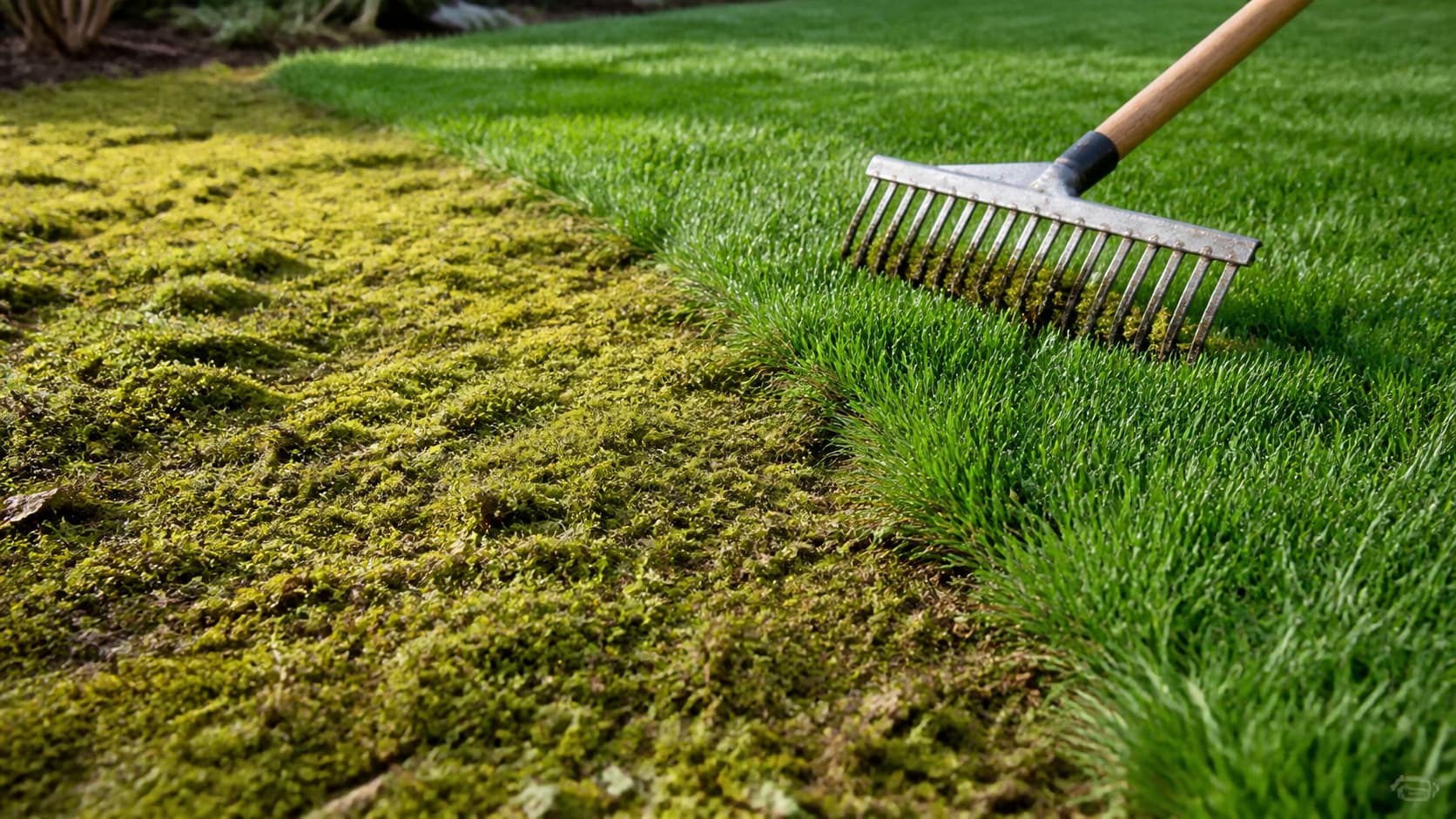
Moss in a lawn is always a sign that the growing conditions for grass are poor. If you remove only the moss but leave the cause in place, it will be back within a couple of months.
The four main causes
- Compacted soil: grass roots get no air and weaken, while moss adapts to dense ground
- Acidic soil: a pH below 5.5 suits moss better than lawn grass
- Shade and moisture: under trees and in the shadow of buildings, moss is always the stronger competitor
- Lack of nutrients: a starving lawn thins out and moss fills the gaps
How to fight it in the right order
In spring, start with scarifying, which combs the moss out. Then aerate the soil so the roots get air. Check the soil pH: if it is below 5.5, add lime. Finally, fertilise the lawn properly, because dense, strong grass is the best moss control there is.
Does iron sulphate help?
Iron-based moss killers burn the moss black within days and the result looks impressive. But if the soil stays compacted and acidic, the moss grows back. Use these products only alongside fixing the causes.
If your lawn is already more moss than grass, we can help: a spring deep-care treatment with aeration and fertilising, or a full lawn renewal if needed.
See also our service: lawn care.