

Preparing the lawn for winter: what to do in autumn
How the lawn goes into winter decides how it comes out in spring. An autumn checklist of five steps.
The spring condition of a lawn is decided in autumn. A lawn that goes into winter weak will greet you in spring with bare patches, moss and snow mould.
The last cut: shorter than usual
Mow for the last time when the grass has almost stopped growing, usually late October. Height 4–5 cm: grass that is too long lies flat under the snow and rots, grass that is too short freezes.
Autumn fertiliser: potassium instead of nitrogen
Summer fertilisers high in nitrogen are forbidden in autumn: they push growth and the grass has no time to harden off before frost. An autumn blend with potassium and phosphorus strengthens the roots and improves winter hardiness. Apply in September or early October.
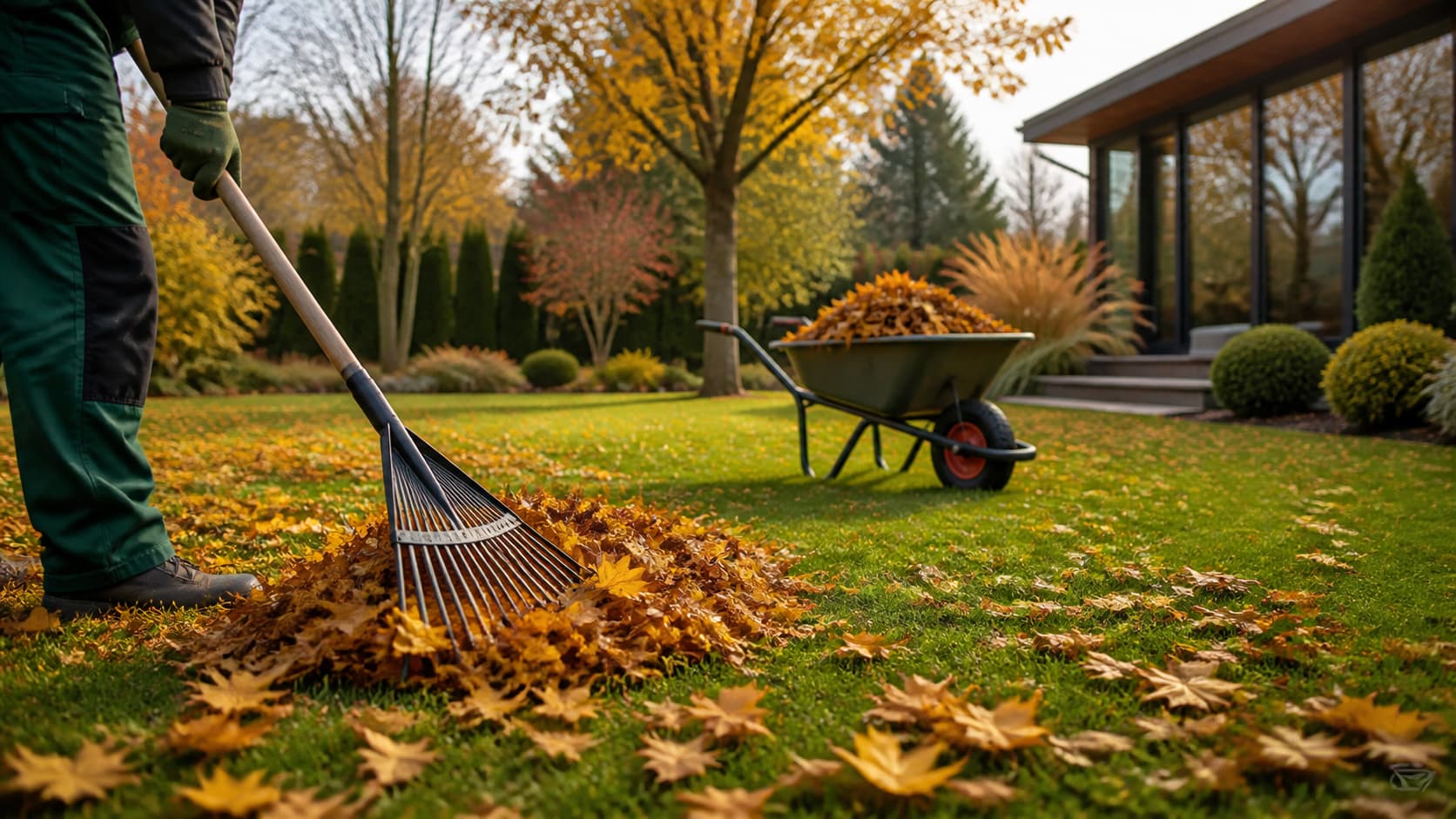
Clear the leaves — no exceptions
A layer of leaves under the snow is the perfect breeding ground for snow mould. Rake leaves until permanent snow cover, especially on young lawns.
Aerate if the soil is compacted
If the lawn has had heavy foot traffic all summer, autumn is a good time to aerate. The holes let water drain down instead of freezing as a crust on the surface.
In winter: stay off frozen grass
Frozen stems break, and in spring a brown path will mark every shortcut. Plan the route to the compost bin over paving instead.
If you would rather not spend weekends on all this, order a full autumn care package: we mow, fertilise, aerate and remove the leaves in a single visit.
If you would rather leave the work to professionals, see our service: seasonal lawn care.
Seasonal lawn care
We visit your site, assess the scope and send a written offer. Free of charge and with no obligations.