

Spring pruning of fruit trees: why, when and how
February to April is the golden window for pruning fruit trees. Why an unpruned apple tree gives a poor harvest, and how to fix it.
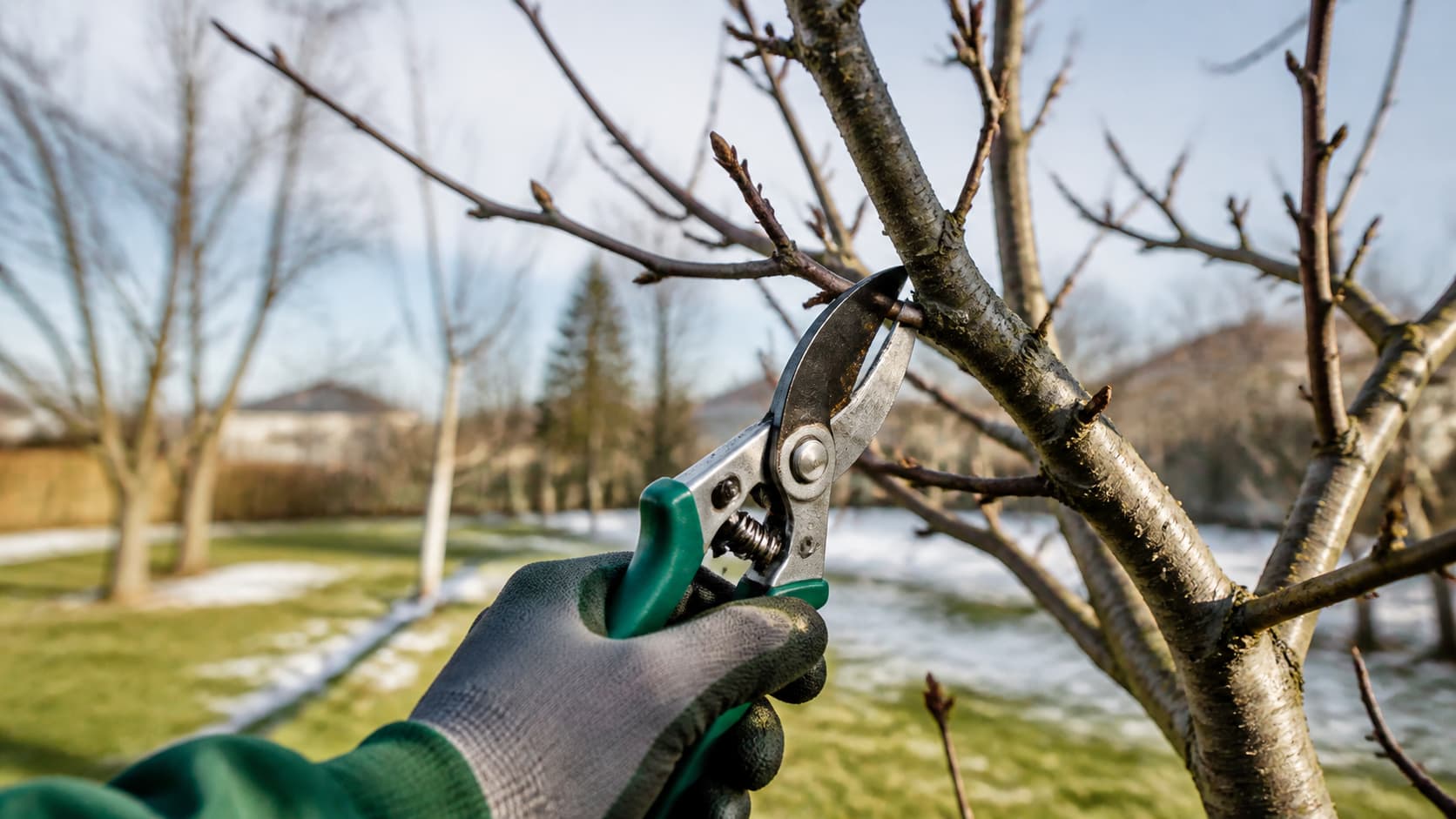
An unpruned fruit tree turns into a dense thicket within a couple of years: the fruit stays small and diseases spread fast. A properly pruned tree, on the other hand, produces a large, sweet harvest for decades.
Why pruning increases the harvest
A fruit tree needs light and airflow inside the crown. When branches cross and shade each other, fruit only ripens on the outside of the crown. Pruning opens the crown up, light reaches every branch, and the tree puts its energy into fruit instead of growing more wood.
The right time is early spring
The main pruning is done from February to April, while the tree is still dormant but the hard frosts have passed. A dormant tree tolerates pruning best, and the cuts heal quickly with the spring growth.
Three typical mistakes
- Too much at once: rejuvenating an old tree must be spread over 2 to 3 years, otherwise the tree responds with an explosion of water shoots
- Wrong cut placement: never leave a stub and never cut flush with the trunk; the right spot is just outside the branch collar
- Blunt tools: a torn cut heals slowly and opens the door to disease
When to call a professional
If the tree is old, tall or has gone unpruned for years, it pays to order the first restorative pruning from a gardener. You get a proper foundation that is easy to maintain yourself afterwards. Our gardeners do the inspection and pruning plan free of charge.
We can do this work for you: fruit tree pruning.