
Moss on the roof: why it is dangerous and how to remove it
Moss on a roof looks like harmless aesthetics until it starts destroying the covering. Why it must go and how to do it safely.
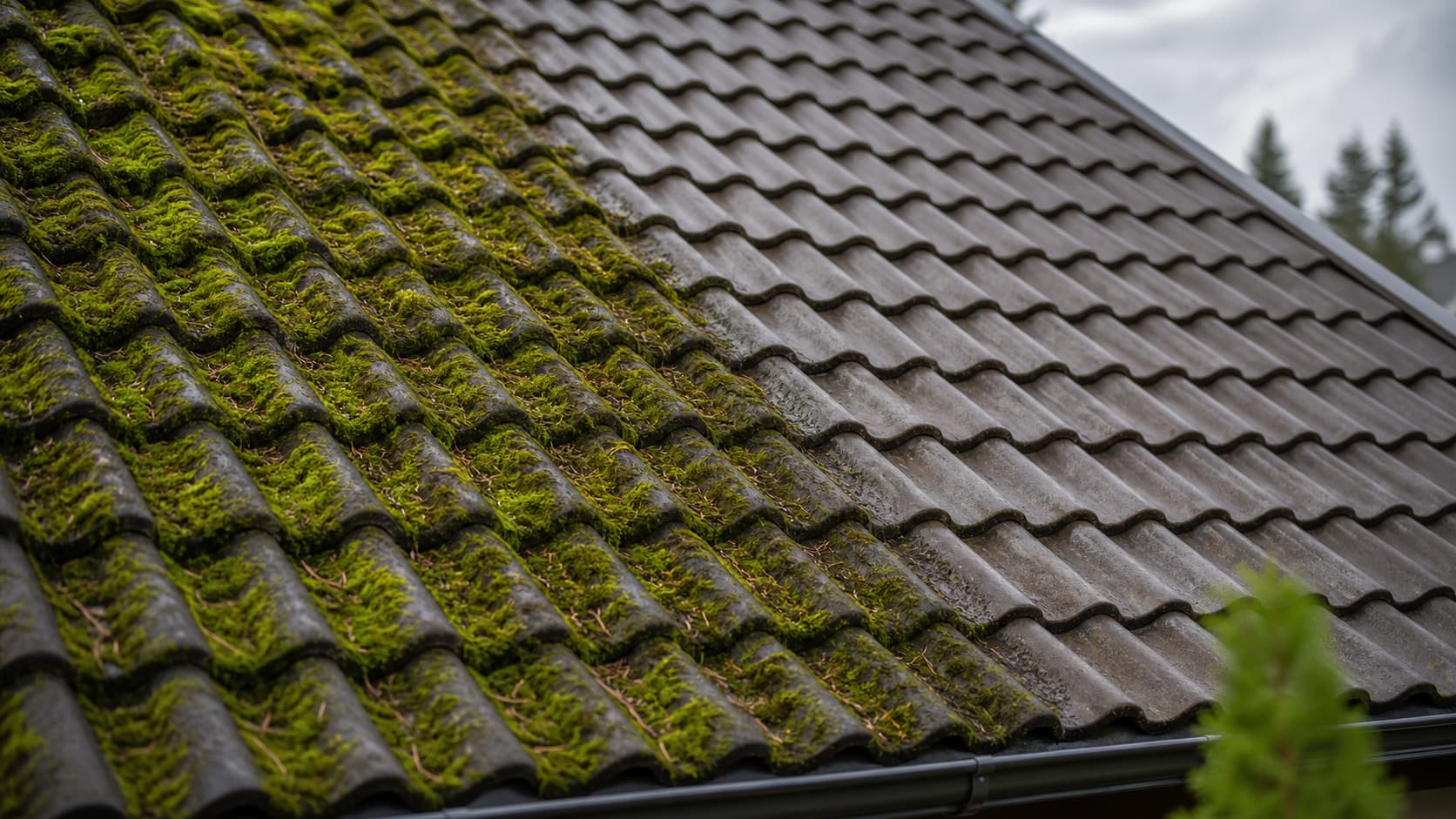
In Estonia’s damp climate moss appears on roofs within 5–7 years of building, especially on north-facing pitches and under trees. And it is not only a matter of looks.
Why moss harms the roof
Moss acts like a sponge: it holds water on the covering. Moisture enters micro-cracks, freezes in winter and widens them. Slate and tiles crumble, and the roof’s service life shortens by years. Under moss pads dampness lingers, fixings rust, and loose moss clogs gutters.
Why you should not just scrape it off
Dry mechanical scraping scratches the protective layer of the covering, and moss returns even faster on the damaged surface. A household pressure washer on full blast is doubly dangerous: it knocks the surface off slate and drives water under the joints.
How we clean
Soft washing with pressure matched to the roof material, working top to bottom so water does not go under the joints. After cleaning we apply a treatment that kills remaining spores and slows regrowth for several years. We work with fall protection and height-access equipment.
Prevention
Trim tree branches over the roof: shade and leaf fall are moss’s main allies. Once a year clear the gutters and inspect the north pitch.
Roof washing pairs well with façade washing: the equipment is already on site and the house transforms as a whole in one or two days.
See also our service: roof washing.