
When is the best time to install rolled turf?
Rolled turf can be installed from spring to late autumn, but each season has its own rules. Here is when a new lawn roots fastest.
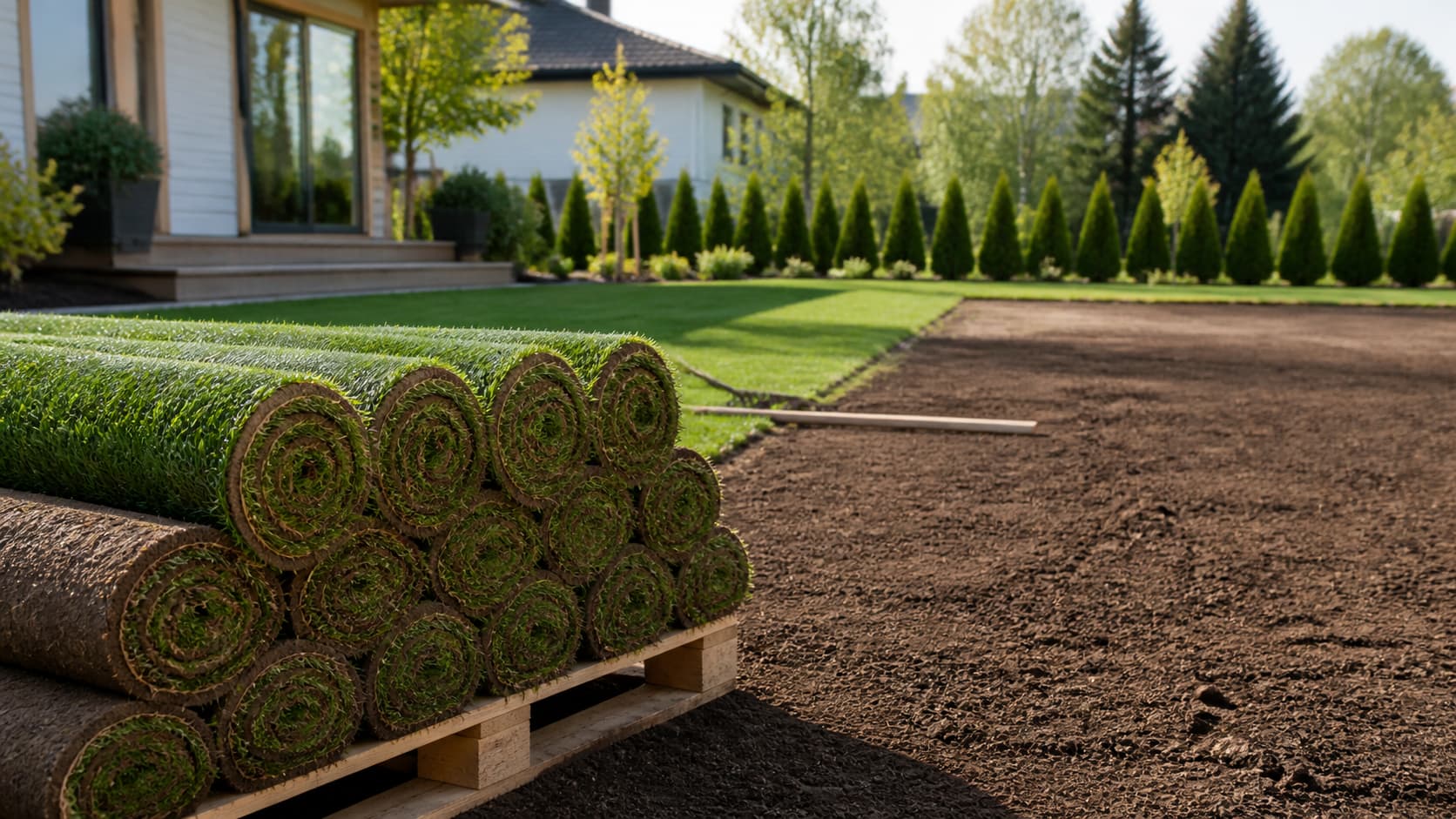
Rolled turf installation turns a bare construction yard into a dense green lawn in a single day: field-grown sod cultivated at a turf nursery for up to two years is laid over prepared topsoil, skipping months of bare mud and weed competition. In Estonia, rolled turf can be laid from late April until mid-October, but spring, summer and autumn installations differ sharply in how fast roots knit into the soil and how much water the lawn needs during its first fortnight.
Spring (late April to early June): fastest root establishment
Biologically, spring is the prime window for laying turf. Days are long, winter moisture is still present in the subsoil, and moderate air temperatures (+12 to +20 °C) drive rapid white root growth without heat stress on the grass blades.
- Turf laid in May sends fresh roots down into the underlying topsoil within 7 to 10 days.
- Within three weeks the lawn handles full family foot traffic well before midsummer heat arrives.
Summer (mid-June to mid-August): possible only with disciplined watering
You can lay turf in July and August, but success hinges on the first 48 hours:
- On hot days, palletised turf rolls cannot sit waiting in the sun — every roll must be laid and soaked on the same day it was harvested, otherwise heat builds up inside the roll and cooks the grass overnight.
- For the first two weeks, summer-laid turf requires daily heavy watering (twice daily in +25 °C heat) so water penetrates right through the sod mat and wets the top 3–5 cm of soil underneath. Without an active automatic irrigation system, laying large areas of turf in July is risky.
Early autumn (late August to mid-October): the second golden window
Late August and September are nearly as favourable as May. The ground retains summer warmth, morning dew and autumn showers keep the turf moist naturally, and annual weed pressure drops off. The key rule in autumn is allowing at least 2 to 3 weeks of rooting time before steady frosts, ensuring the sod anchors firmly before winter.
Base preparation matters more than the calendar date
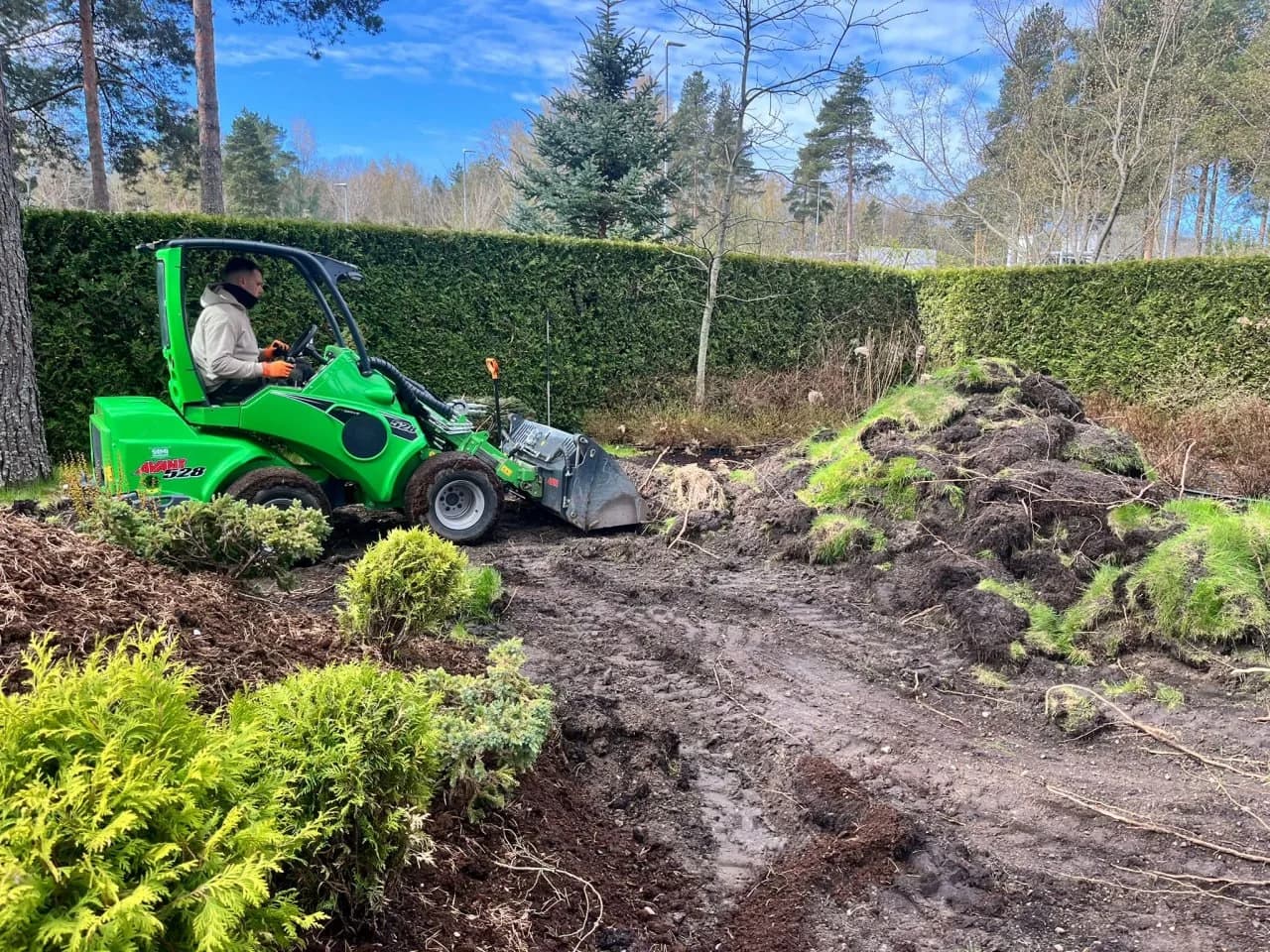
No season will save rolled turf laid over thin, stony or uncompacted soil. A lasting lawn requires a 12 to 15 cm layer of screened mineral topsoil, graded to shed water away from buildings and rolled firm so an adult heel sinks no more than a couple of millimetres.
We handle the entire build from sub-base to finished turf: see our ground levelling and earthworks, screened topsoil and bulk material delivery and rolled turf installation services.
Common questions
How soon after laying rolled turf can we walk on it and mow it?
Avoid walking on the new turf for the first 10 to 14 days while the soil underneath is kept wet and roots are pinning the sod down. Make the first cut 7 to 10 days after installation with the mower set to its highest notch (around 6 cm), turning gently at the ends of each pass.
How do I check whether newly laid turf is getting enough water?
During the first week, lift a corner of a turf strip and touch the topsoil underneath. If the underside of the sod and the top 2 to 3 cm of soil beneath it are evenly damp (without standing puddles), your watering volume is spot on.
How long can rolled turf stay on pallets before being unrolled?
Harvested turf is living plant material that must be unrolled within 24 hours of cutting at the nursery (and within 12 hours in hot summer weather). Left rolled on a pallet, turf heats up and suffocates, turning yellow within a day.
Rolled turf installation and lawn seeding
We visit your site, assess the scope and send a written offer. Free of charge and with no obligations.